The taxi had just dropped a passenger off at my hotel in Kuala Lumpur when I jumped into it. It was an old car, not one of the swankier blue ‘executive’ taxis I had seen.
The driver, a Chinese man, asked in English: “Where you want to go?” Without thinking, I replied in English – a mistake, because my accent was a dead give-away. The guy probably thought I would be easy prey.
After I explained where I wanted to go, I noticed the meter at the front whirring rather rapidly. It was then that I decided to switch into Cantonese. The following conversation ensued.
Me: “Your meter is going too fast isn’t it?”
Driver: “Oh, you know how to speak Cantonese ah?”
Me: “Of course! I’m Malaysian. Your meter!” I pointed towards the continuously flickering number. “Why is it going so fast?”
Driver: “You don’t like it, you can get out.”
I did. He stopped the car and I walked back to the hotel. Fortunately, we hadn’t travelled far. Unfortunately I was staying at the Mandarin Oriental, a wonderfully plush place but where no taxi comes cheap. The next car I hopped into was somewhat better, but the driver couldn’t find my destination. For what I ended up paying, I could have taken a return journey from Kuala Lumpur to Ipoh on the electric train (205 km) with change to spare.
Then, a few weeks ago, my partner and I encountered the neurotic driver. This one was Malay, allocated to us at the Kuala Lumpur International Airport by chance. He too, was unable to find our destination – despite specific instructions over his mobile phone from my cousin. It was when she tried to give him directions that the driver lost his head. He announced that he couldn’t think; instead of listening to my cousin, the driver stormed into every garage we saw, in search of directions! In exasperation, my cousin told him she would come in person to pick us up. At that point, the driver’s panic reached new heights. “I have three children!” he cried. “If you complain, they will suspend me for three days! How to feed my children?”
I looked at the man in astonishment. Neither my partner nor I had said anything to warrant such an outburst; in fact, complaints were the last thing on our minds. When we climbed out of the car to wait, our conversation took an even more bizarre turn.
Neurotic driver: “Get back inside.”
Me: “Sir, my cousin is coming to pick us up. Please take our bags out of the boot.”
Neurotic driver (screaming): “No!”
Me (incredulous): “You mean you won’t give us our bags?”
Something in my voice must have shaken the man, because he finally lifted our suitcases out. We were so relieved to be rid of the guy that we paid the fare and gave him a healthy tip.
These incidents blighted my experience of Malaysia. I dreaded getting into a taxi, knowing we would have an argument either at the beginning (if, despite the meter, you agreed the fare upfront) or at the end (if you hadn’t agreed a fare and weren’t going to pay what the meter purported to show). If I could be treated so abominably, what hope would there be for visitors who don’t speak our local languages?
Just as I was ready to give up hope of ever finding a decent taxi in Malaysia, we discovered a ‘local’ taxi company. ‘Local’ just means they’re not the blue ‘executive’ taxis favoured by tourists. Local taxis may not look as nice, but they are clean and air-conditioned. The drivers are polite, they come on time, they know their roads and most importantly, their meters appear to work as they should.
There’s only one problem: their rude back-office – the people who take your calls. Alas, Malaysian hospitality doesn’t seem to have infected its taxi services. When I called Super Cab yesterday afternoon, the woman on the other end of the line told me, “No taxis at the moment. You have to call back in ten minutes.” When I protested that I only wanted a taxi in thirty minutes, I could hear her sigh as if she were speaking to a belligerent child. “Like I said, no taxis now,” she resumed, her tone weary. “Call back in ten minutes.”
I was the customer, yet I was expected to call them back. Obviously a case of too much demand, not enough supply. I resorted to calling my hotel and asking for an executive taxi. It cost twice as much as Super Cab would have, with no discernible difference in quality, but it saved me much aggravation. Sadly, it seems this drama entitled The Taxi Drivers and I, is set to continue running.
My novel, set in Malaya (now called Malaysia) is multi-layered. I’ve written it in such a way that a reader can enjoy it without knowing any Malaysian history. Of course, the story would be richer for those with some knowledge of the country. Malaysians will see more to the story than Westerners…perhaps even controversy and criticism of present-day Malaysian racial politics.
It’s not intended as such; I simply wanted to tell a powerful and entertaining story. Yet, there’s no denying that at the time the story begins, Malaya was more truly one country than it is today. Which is ironic, because the current Prime Minister has initiated a campaign called “One Malaysia” – 1Malaysia, supposedly to ‘preserve and enhance the diversity which is our strength’. I will explain in this blog-post why the slogan 1Malaysia is farcical when used in today’s Malaysia. Below, I write from my personal experience and understanding.
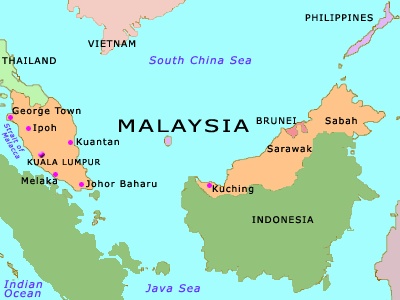
First, I have to tell you more about Malaysia. Let’s start with where it’s situated. The map below should help. Malaysia is coloured orange and comprises two parts: a western peninsula, and the northern part of Borneo (the island on the right, which belongs mostly to Indonesia). The point to note is Malaysia’s strategic position. India lies to the north-west, China to the north and north-east. Siam (now Thailand) neighbours it to the north, while Indonesia lies directly south. That narrow bit of sea which separates western Malaysia from Indonesia, known as the Straits of Malacca, provides a sheltered channel for ships and is still famous for pirates.
Because of this fortuitous position, Malaysia has been at cultural cross-roads for centuries. Malays themselves are thought to have come from Yunnan in southern China. Traders from as far as Arabia also came, as did Indian princes and of course, some of my ancestors, the Chinese, who arrived in their junk-boats. Nearer home, Malays from neighbouring Indonesia migrated in regular waves, not to mention the south-bound Siamese (modern Thais) on the backs of elephants.
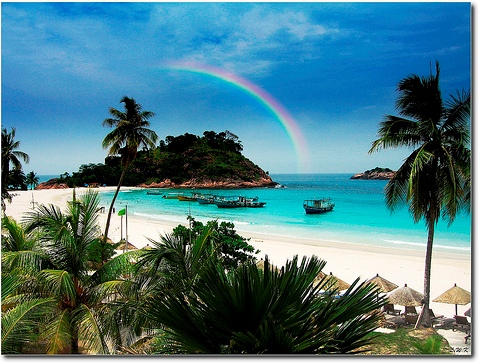
Many of these early immigrants settled in Malaya, which is not surprising – the land I come from is glorious, its people hospitable. It has everything: stretches of sand where palm trees sway, pristine waters always warm to the touch, but also mountains crowned in luscious green.
It’s a piece of paradise on earth. As a result, new communities grew, including mixed-heritage peoples like the Nyonyas.
Then, the British came. (Though there were other Europeans before – Dutch, Portuguese, they’re not important to this narrative). The British arrived in the late 1700s, but their influence reached its nadir during the late 1800s where my novel begins. Under British rule, the waves of migration – which had happened naturally in Malaya until then – were disrupted by the large-scale organised import of labour from India and China. The new workers were needed for the rubber plantations and tin mines which the British opened up.
With all this migration, you might have thought that nobody lived on these lands until the waves of immigrants arrived. Not so, because there are indigenous peoples in Malaysia– the Orang Asli (which incidentally means the ‘original people’ in Malay).
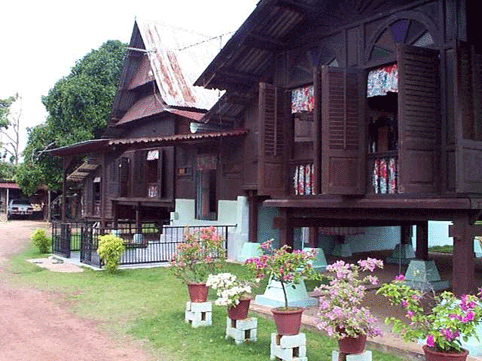
The racial composition of modern Malaysia is: Malay (50%), Chinese (24%), Orang Asli (11%), Indian (7%), others (8%). As with many multi-cultural societies, each community is famous for certain things – except for the Orang Asli, who have been marginalised. Malays have a refined sense of beauty; just look at their traditional dresses and houses (picture on right, below).
Indians are entrepreneurs and professionals, especially in law and medicine. As for the Chinese, well, shrewd business people who work hard, with many self-made millionaires from among the coolies who arrived during the tin years. In fact, the Chinese diaspora in Asia are called the Jews of the East, our priorities being family, children’s education and business. I know quite a few who say, “Let me do my business. I don’t care about politics”.
With such rich heritage and diversity, Malaysia must be the perfect place to live, right? Just like in that world-famous song from the Malaysian Tourist Board ad campaign – Malaysia, Truly Asia –where people of different races dance and smile happily? Unfortunately, not quite.
In the late 60s just after I was born, a series of Chinese pogroms happened. Many Chinese were murdered. Actually as soon as I was born, I had to flee Singapore: my grandmother and her maid took me away from my parents to a safer place (near Ipoh), many hours away by train at the time. For two women travelling alone in that time of calamity, it was heroic, and I am so grateful…
And then, on the infamous day 13 May 1969, I remember my father returning early from work. He rushed up, shouting in Cantonese, “They’re killing us!” “Who, who?” my mother asked, and when we heard that Malay mobs were attacking Chinese with scythes and knives, we could hardly believe it. We’d had Malay neighbours, Indian neighbours, all sorts – people who came to our house and drank from the same glasses. In fact, we were living in a predominantly Malay area then, and almost all our neighbours were Malay. We were terrified: if a mob had come to our house, we could have been killed….
No one really knows who caused the incitement which led to these so-called ‘racial riots.’ However soon after – in order to ‘manage racial tensions’ (i.e. to make Malays as rich as Chinese were), racially discriminatory policies commenced which are still in place today. Note that these policies are supposedly justified on the grounds that the Malays arrived in Malaysia before the other immigrants did. Therefore, they are entitled to ‘special rights.’ They’ve even invented a term to enshrine this quality of specialness: bumiputera, which means the Princes of the earth. (Obviously, they couldn’t call themselves Orang Asli, since there were already indigenous peoples.)
These discriminatory policies have been sold as a programme of ‘positive discrimination’ to allow the Malays to catch up economically with the Chinese and Indians. Policy examples:
Any listed company to have at least 30% of equity ownership in bumiputera hands.
University places reserved for bumiputera, regardless of the academic performance (now modified, but still a two-tier system).
For a limited period, a certain percentage of new housing in any development reserved for bumiputera buyers, with developers required to provide a minimum 7% discount to these buyers.
There are plenty of others, but I’ll be restrained here.
Such blatantly race-based policies are bound to have consequences. They have changed Malaysia – and not for the better. Races have become more separated, less friendly to each other, with a cultivated list of grudges. Nyonya culture – that colourful mix of Malay and Chinese traditions, values and beliefs which emerged through centuries of living together and inter-marrying– could never happen in modern Malaysia.
Policies based solely on race are unjustifiable for other reasons.
First, they de facto assume that Malays would be incapable of competing on merit. As a person with Malay blood somewhere down the line, my Great-Grandmother being a Nyonya, I find this insulting (as no doubt do my mixed Malay-Chinese cousins).
Secondly, who cares whose ancestors arrived first on our shores? Surely what is more important is what we can each contribute to building up our country.
Thirdly, it creates the indescribable reality that not all Malaysians are equal. Which is sad, but true. This has played a large part in making it hard for me to come to terms with being Malaysian-Chinese (evidently, though I have Malay blood, I don’t have enough of it).
In the face of all this, how can we even talk of 1Malaysia?
There may well be Malaysians reading this who call me unpatriotic. Some may even say that if I don’t like it, I should go ‘home’. I don’t know where they think my home is; China? My response would be that if they can’t be criticised, they should stop pretending we have a democracy.
Especially for those who question my patriotism, I describe here what it was like for me being back in Malaysia after seventeen years away. I remember the moment well. It was afternoon when we landed. As soon as I stepped outside the airport, a blast of humid air hit me, and I felt the heat seep into my bones. It was such a familiar feeling, even after so many years, that if feelings could be painted, then that moment is forever engraved in my memory. I knew instantly that I had come home.
That moment made me realise my visceral connection with this land in which I grew up. It’s my country too. I will always have this connection, no matter where I live in this world. And no matter what racist policies remain in place in Malaysia. Policies which make me feel unwelcome and unable to live here to the full. Where is home for me?
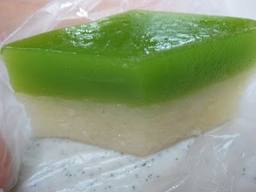
…well, not literally. These are modern photographs, and sadly, not my own, but they convey the wonderful colour and intricacy of the ‘cakes’ my great grandmother would have made.
The ‘cakes’ feature heavily in my novel, as does the cuisine of the Nyonyas (explained below) – to the extent that my editor wryly told me one of the chapters made her very hungry! Which I took to be a good sign, given that I didn’t include pictures in my draft.
Now here’s what’s interesting about the ‘cakes’, which I will refer to henceforth by their Malay name of ‘kueh’ : they are wheat- and dairy-free. This makes them perfect for those of us who wish to avoid gluten and animal milk. Alas, I have to say the kueh are not for the weight-conscious, because they generally include copious amounts of coconut milk, coconut cream or grated coconut (sometimes all three!) as well as palm sugar (that lovely semi-viscous brown stuff you want to stick your fingers into). So the kueh may help with allergies, but not with girth…
Before I write more about the kueh, I should say a little about the formidable women who created them. The kueh you see here weren’t made by just anyone – but by a small community of women in Malaya known as the Nyonyas. This is important in my novel because the main character is a Nyonya (just like my great grandmother on whom the character is based). Therefore, the cakes the women made are known as Nyonya kueh. Which begs the question: who were the Nyonyas?
The short answer is that they are women of mixed Malay-Chinese heritage going back centuries (from the time Chinese traders first arrived on the Malay archipelago). The timeframe is important, because there may be many people with mixed heritage, but very few have managed to evolve a community with a culture as distinctive as the Nyonyas’. The Nyonyas succeeded by combining local Malay values and customs with the beliefs and traditions of their Chinese husbands, in very particular ways. For example, the women – who were Moslem – took on the religion of their husbands, converting to Taoism. I mention this because religion played an important role in Nyonya life, and bowing before an altar table, lit joss-sticks in hand, is a recurring theme in my story.
Of course in modern Malaysia, the fact that local Moslem women were able to convert from Islam to another religion, is never discussed. (It isn’t allowed today; today in Malaysia, if you’re born a Moslem, you remain a Moslem). Which is another reason why Nyonya culture is so unique and fascinating: it developed during a time when Malaya truly was one. I will have more to say about this in a later blog. Watch this space!
Now, to come back to Nyonya kueh. There are many varieties, all delectable and delicious, and some have symbolic significance. For example, the red ones below (angkoo) are traditionally given to relatives and friends to celebrate a baby’s first month on earth. I remember my first taste of angku when I was three: how the skin, made of glutinous rice flour and sweet potatoes, felt soft; the filling, of crushed mung beans, even softer, and bursting with flavour. I didn’t know what the flavour was at the time; now I’ve learnt it’s the scent of the pandanus leaves with which the beans are steamed. Simply delicious!
So, with all these varieties, you may well ask why I haven’t made any Nyonya kueh yet. The answer is partly because I fear the work, Nyonya cuisine being notorious for its sheer labour (when done properly, with no shortcuts), and partly because I haven’t had time to source the necessary ingredients in London. I’m referring here to exotic things like pandanus leaves, green pea flour, and natural colourings from for example, the clitoria flower (I haven’t made that up). Once I’ve made my first batch of Nyonya kueh, you’ll be the first to see the results!






 Window into Other Worlds