
Depravity sells. That’s hardly news. What you don’t expect is for your national broadcaster to actively promote and reward perversion.
This is what the BBC has been doing, unchallenged, for decades. The revelations that emerged during the trial of the so-called comedian, Russell Brand, were the last straw. I cancelled my TV licence.
In truth, I had considered cancelling for a long time. I’m late to the exodus: last year, more than half a million households had already cancelled their TV licences.
I don’t know what motivated others to act, but I’d be surprised if the list of BBC scandals didn’t play a part. In no particular order, we’ve had Jimmy Saville, Huw Edwards, Gregg Wallace and now Russell Brand. And these may just be the tip of the iceberg; these may simply be the men whose sins were so egregious, even the BBC could no longer cover for them.
It begs the question: how many more sexual predators, paedophiles and loathsome males still lurk inside those hallowed studios, protected, nurtured and handsomely rewarded by our licence money?
Of course, when we learned that the BBC paid John McEnroe at least £100,000 more than it paid Martina Navratilova for commentating at Wimbledon, we got an inkling of how highly BBC top brass valued women, an impression compounded when Carrie Gracie, the BBC’s former China Editor, sued for pay discrimination. The BBC ‘put it right’ by giving her back pay.
Then there’s Martin Bashir, whose 1995 Panorama interview with Princess Diana was riveting. I was among the audience of 23 million. What we did not know was that Martin Bashir had forged documents and fed lies to Diana to get his interview, lies which very likely influenced her answers. His bosses at the BBC did know about this duplicity; they knew and they chose to turn a blind eye. Not only that but, as Prince William eloquently describes below, the BBC then proceeded to cover up, evade and milk that interview’s commercial success. What does this say about integrity at the BBC?
Martin Bashir crossed the pond to the US, where he was hired by ABC News, a prime American media outlet. While at ABC News, he spoke at a conference for Asian American journalists. Bashir said, ‘I’m happy to be in the midst of so many Asian babes. I’m happy that the podium covers me from the waist down.’
That Martin Bashir happily alluded to an erection within a professional setting tells me he must have made many such comments before. Which says a lot about the BBC’s workplace culture.
ABC News suspended him. Bashir moved over to MSNBC, another respectable outlet, where again, he was involved in controversy and suspended.
When someone has been suspended twice, you would’ve thought it might be difficult for him to get another job in the same industry, wouldn’t you? Not for a man in media. Where did he re-surface? At the BBC, of course! And in which section? Religious affairs, no less. Men who have sinned love embracing religion.
Under the terms of its Royal Charter, the BBC has a duty to be impartial (Section 2.1). Thus, it was with incredulity that I followed the 2025 scandal involving Panorama. The Panorama team had made a documentary around the infamous events of January 6, 2021, when thugs — Donald Trump’s supporters who were angry at his election loss — had stormed the Capitol, forcing the-then Vice President Pence and his family into hiding inside the building.
Do I believe that Donald Trump stoked the crowd up with baseless claims? Yes, I do. Anger and an elasticity with facts have been core elements of his political strategy.
On the other hand, do I think that the BBC deliberately doctored video footage to make Donald Trump say things he didn’t actually say? Yes, again. And there’s no justification for a national broadcaster descending to the standards of the gutter. That’s not what I pay a licence fee for.
The BBC later issued an apology, but all that they were willing to concede was an ‘error of judgment’. Error of judgment?? Watch the footage on the link here from FreedomBriefing on Instagram, alongside its side-by-side comparison with America’s PBS (Public Broadcasting Service) original and decide for yourself. This is how fake news gets disseminated. Do we really need fake news from our own national broadcaster?
And we’ve not even discussed the thorny subject of Gaza. On Gaza, Israel and Jews generally, the BBC really has excelled itself. The narrator of an unworthy BBC documentary entitled Gaza: How to Survive a Warzone, was found to be none other than the son of Hamas’s Deputy Minister of Agriculture! This is about as impartial as having Vladimir Putin narrate a documentary about Ukraine and calling it War, What War?
When I told friends that I was thinking of cancelling my TV licence, their general response has been, ‘Oh! But the BBC does some really good stuff!’
That’s true. In every large organisation there must be a few good apples. Just two days before cancelling my licence, I watched an excellent Nigerian movie, ‘My Father’s Shadow’, the first Nigerian movie I’ve ever seen. It was produced jointly by BBC Film and the British Film Institute.
So what? The fact that the BBC is capable of compelling drama does not absolve it of the dual requirements of impartiality and the highest professional standards. Impartiality and high standards mean that you sack the likes of Russell Brand when he urinates into a cup in the BBC studios (his workplace). It means you don’t resort to the gimmicks of cheap podcasters. Impartiality and high standards demand courage, a characteristic the BBC profusely lacks.
Lucie Kon’s story illustrates the BBC’s rot. She is a journalist whose work has won a BAFTA award, an Emmy and an Oscar. She’s Jewish. She worked at the BBC for many years, but everything changed after October 7, 2023, when Hamas massacred thousands at the Nova Music Festival. In Kon’s own words: ‘I went from a BBC journalist who happened to be Jewish to being a Jewish journalist at the BBC.’ When Kon pitched the idea of a documentary about Hamas’s massacre, her bosses liked it, but told her she could not be in charge because she was Jewish and therefore ‘partial’. This is akin to saying that I could not possibly be objective about Communist China because I’m ethnically Chinese.
Her documentary, We Will Dance Again, a minute-by-minute account of what happened on October 7, 2023, went on to win an Emmy, no thanks to the BBC. The BBC’s press officers refused to promote the film. Lucie Kon had to hire her own PR agents.
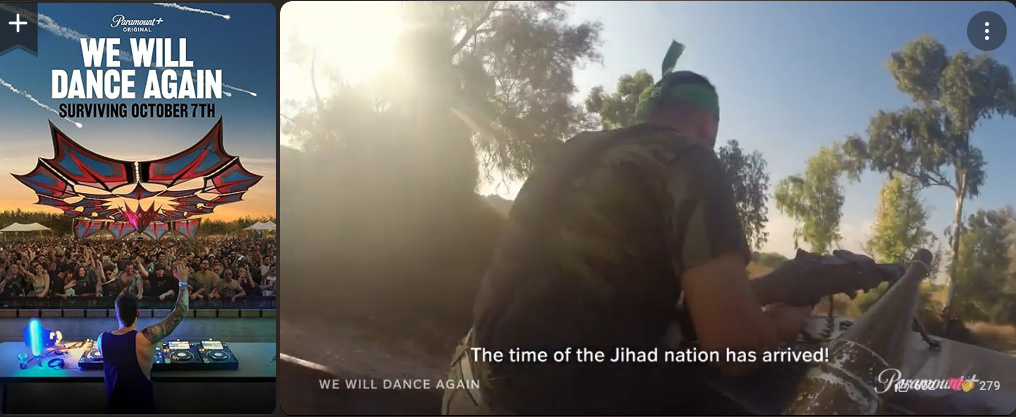
Think about that. The BBC allowed staff to abdicate the responsibility of doing the very jobs for which they were being paid! If someone had objected to a documentary about lesbians, say, and had refused to promote it on the grounds of religious belief, would the BBC have just rolled over? I doubt it. The worst pious indignation seems exclusively reserved for Jews. If you think I’m exaggerating, watch her interview below.
Lucie Kon threatened to take the BBC to an employment tribunal for antisemitic bullying and discrimination. The BBC dished out £400,000 in settlement money. Sclerotic organisations don’t pay large sums for no reason: bosses must have feared losing.
In the case of Russell Brand, they had already lost control. As far back as 2010, Brand described how his BBC boss at Radio 2, Lesley Thomas, ‘was incredibly tolerant of his behaviour’. Antics included having sex with prizewinners in the BBC’s disabled toilets (page 116 of Booky Wook 2, published by Pan Macmillan and widely quoted). Is it really better to have a morally reprehensible public service broadcaster than to have no public service broadcaster at all?
It must be said that the BBC was hardly alone in promoting repugnant characters like Russell Brand. Much of the media, including the publishing world, lacks a moral compass. The difference is this: we don’t have to pay licence fees to those other specimens of lowlife.
If you no longer trust your public service broadcaster to be impartial, if said broadcaster can’t even provide the facts of what happened, as they actually happened, what is the point of its existence? The BBC has demonstrated zero capacity for learning from past mistakes. I’ve concluded that it is too rotten to be reformed. The BBC does not deserve to survive.
If you wish to cancel your TV licence, here’s the link. Not having a licence does not mean you can’t watch TV, by the way: you just can’t watch live TV or have iPlayer on any device. They don’t make cancelling easy: you actually have to speak to a human first. The Geordie man who answered asked why I was cancelling my licence and laughed politely when I said that I hated the BBC.
He then went through the list of content I’d be missing and warned me to expect a visit at some point. Let them come! Two years ago I took a bridge course and I love the game; TV inspectors are more likely to find me playing bridge than watching TV. And if not bridge, there’s always the good, old wireless. Who needs live TV?


