When Resemblance to Real People May Not be Coincidental

A year ago, I began writing my novel. I completed the first draft three days ago – twenty three chapters in all. I thought I would be relieved; instead, I’m numb. When I look back, I see a cycle of dreaming, writing, research…inventing, followed by more writing…followed by more research. Even now, I’m carrying out research in Malaysia, hoping to weave small details into my story. What I’m looking for are the simple everyday things we forget about, because they become as natural as breathing. To find these hidden gems, I’ve had to deploy methods that were at times unorthodox (though perfectly legal). This blog-post is about how I gathered such pearls.

Aunt Lorna at Sri Nyonya

The first victims in my quest for authenticity were my family. This seemed natural, because all I had a year ago were a rough story-line and the raw passion to tell a story linked to Great Grandmother. I conducted interviews with every single family member willing to talk: uncles and aunts, grand-aunts, my mother. They would see me coming with a little black case; it contained an Olympus digital voice recorder, a present from my partner, an apparatus no larger than a small Nokia handset – but extraordinarily powerful. Once, I put it in the middle of a large dining table at Sri Nyonya, the Nyonya restaurant in Petaling Jaya run by my aunt Lorna (see picture) and uncle James, and was pleasantly surprised. Amidst the clanking of bowls and howls of laughter, I could decipher every word that was said.  
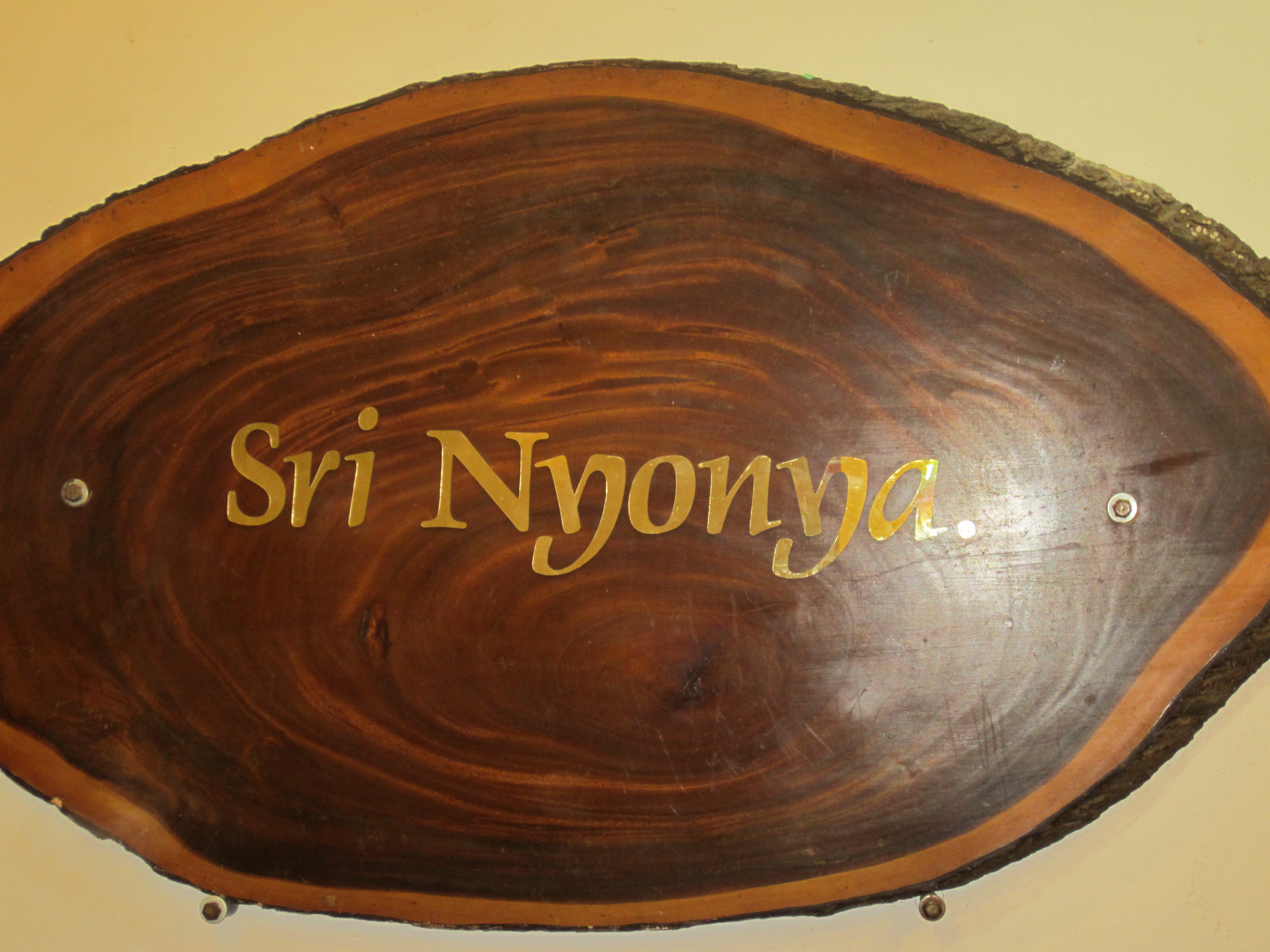
While speaking of Sri Nyonya, I can’t avoid mentioning food. Nyonya cuisine plays a pivotal role in my story, and learning about its intricacies formed an important part of my research. Needless to say, eating was equally important. I could hardly have found a better place; the recipes at Sri Nyonya have been passed down for generations – and it’s run by family! 

Through good old-fashioned talking, I learnt about Great Grandmother and the Malaya of times past. The best anecdotes came unexpectedly, spurred by the jerk of recollection, the sort we tend to have once our memories are stirred. In the middle of one conversation, an aunt blurted out, “Very naughty boy-lah! Make my mother so sad…,” about her own father, which of course caused my ears to prick up. I then heard what the naughty boy got up to, and carefully stored the story to see what I could do with it. For a while, that was my modus operandi: listening, transferring what I’d heard onto my laptop, jotting down notes. It might have been different with a less loquacious family, but fortunately mine loves to talk.

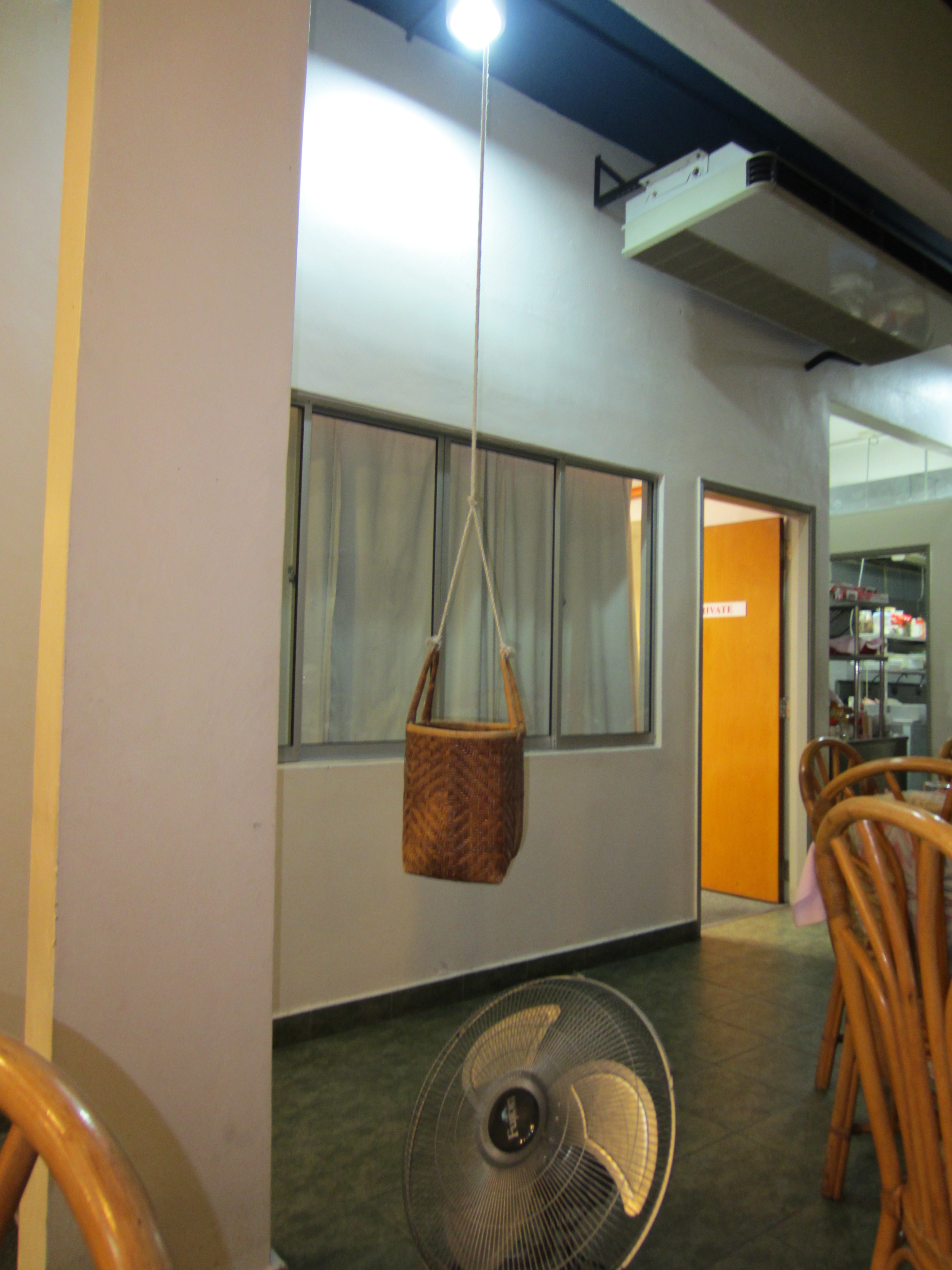
My relations were able to make their childhood years come alive in a way no history book ever could. For example, my cousins reminded me of the ingenious pulley system that was used in old Chinese shops (there’s a modern version in the internal courtyard at Sri Nyonya – see photo). A basket suspended on a piece of strong rope which was looped around itself allowed residents on the top floors of the two-storey shop-houses to buy goods without having to descend staircases. If their favourite street vendor passed, residents would shout out of their windows for what they wanted. These could be dry dishes, such as bundles of aromatic rice wrapped in fragrant banana leaves, or wet food, bowls of noodles say. After calling out orders, the people upstairs would lower their basket with a plate or bowl and the necessary coins, and a few minutes later, haul up their basket, noodles and all, with change for their money.
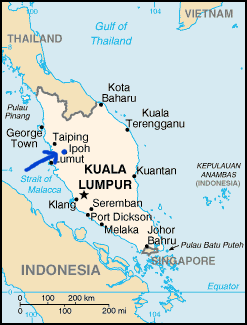
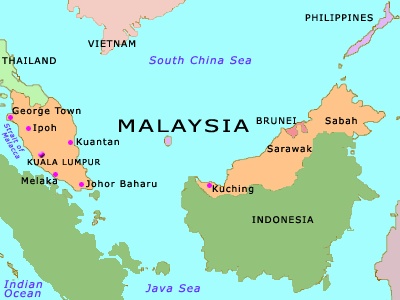
Of course, I didn’t just rely on memories; I also went to the National Archives in Kuala Lumpur, where I spent hours scanning old newspapers to get an idea of what people were reading at the time. Though thin, the papers contained so much gossip that it took discipline not to digress. This is where I acquired fascinating insight into the topics which vexed our colonial rulers. In 1892, the government of Penang (see map) was exceedingly alarmed about an outbreak of cholera – thousands of miles away in Europe.

Map of Malaysia

I learnt things about my country which had been omitted from our history classes.For example, that the British colonial government in Malaya sold opium indirectly to generate revenue, and very openly (while simultaneously banning its import into Britain). It was even accepted practice for the government of the time to place advertisements for opium concessions in leading Malayan newspapers! The 1892 editions of the Penang Gazette advertised one such concession in the state of Perak (where most of my story unfolds). According to the advertisement, the concession gave its holder “the exclusive right to the importing, the manufacturing, sale and licensing others to sell, of chandu (opium), opium dross, and spirituous liquors, free of duty.” I was horrified.

Yet this practice fitted very much with the tenor of that era. The colonial atmosphere is detailed in the book When Tin was King, which charts the rise of Ipoh (more or less in the centre of Perak on the map) as a mining town. During the tin rush which began in the late 1800s, all sorts of adventurers were drawn by the lure of tin. The situation in Ipoh was reminiscent of the gold rush, and it’s no exaggeration to call Ipoh the San Francisco of the East. At the time my story takes place, the area in which Ipoh is located was the world’s largest producer of tin. The metal transformed Ipoh from a sleepy fishing village into a metropolis, and When Tin was King outlines how this happened in entertaining fashion. I was fortunate to have been introduced to its author Dr. Ho Tak Ming, a family physician with a vast knowledge of local history, who has kindly answered many questions.

I must confess to not being the first writer in my family, nor the first to pen Great Grandmother’s story. That honour belongs to my late grand-uncle Chin Kee Onn, whose novel Twilight of the Nyonyas, published in Malaysia in 1984, shares a similar story-line with my own. Thereafter, the similarities end. My story begins in 1878, his in 1915. I’ve told the story from a woman’s perspective, he from a man’s point of view. It’s no surprise we explore different themes; my novel is about a woman’s struggle for survival and her battle for identity. I also explore the consequences she has to face when she spoils her sons. Despite our differences, I owe a debt to my grand-uncle for his book, which at the time of publication, was the first novel ever written about a Nyonya family. I’m grateful to him for leading the way.

My research sometimes went down amusing paths. Because the main character ate everything with her hands, including the Nyonya curries she was so fond of, it occurred to me one day that I should try to do the same. With much enthusiasm, I rolled a ball of rice dipped into gravy in one hand – it looked so easy when I watched an Indian friend do this. Yet, as soon as I tried putting the ball into my mouth, gravy dripped all over my elbows. I gave up after a second attempt, deciding that this wasn’t for the uninitiated.

Then there were the children, of which my central character had plenty. Given the themes I wanted to explore – a woman’s survival and struggle for identity – it seemed appropriate to describe a birth scene. The only problem was my own lack of children. Much as I like children, having a child for the sake of a book seemed excessive. Attending a live birth was out of the question, since I faint at the sight of blood. So I did the next best thing: I interviewed as many friends and family I could find, especially those with three and more children. I also spoke to a nurse in Malaysia who told me in vivid detail the practices of old. In the process I heard amazing stories; I only hope I’ve done justice to them all.

A large family with no illness would be unrealistic, which is why it doesn’t happen in my story. When I needed medical information, I turned to neighbours in London. Veritable doctors, they happily described every conceivable consequence of the illnesses I was asking about. They then plied me with photographic evidence to show how horrible things could become. I ended up borrowing their medical text and staring at grotesque images for several weeks.

That was just before re-visiting Malaysia, where I’ve now completed the first draft of my novel. When I survey the result, I’m a little nervous. Because I know I’ve applied a writer’s prerogative, which is to say that I’ve exaggerated, added embellishments and generally used poetic licence with what I’ve heard and read (except in relation to historical facts and real figures who are named in the story). My creation is a fictional account, but one in which resemblance to real people isn’t entirely coincidental!

It was my partner who spurred my worries. She shot up after reading the latest chapter, telling me how amazing it was to recognise family members she knows from among my characters. Hmmm. It made me wonder how my own family would react. I’ve always told them I was writing fiction, which is true – up to a point. But it doesn’t stop me from worrying that they may not like the characters their relations have become, or their own prototypes have become, or the secrets I reveal, some true, others invented. I only hope they will see my novel for what it is: fiction with a large dose of reality, in which we Malaysians can see ourselves reflected. That after all, is what my research has been for.

6 Comments

Filed under Novel, Research, Writing

The Story of Nu Kua – Excerpt from my Novel

This blog-post is rather special since it’s the first I’m writing from within Malaysia itself – the land in which my story unfolds. To mark the occasion, I thought I’d provide a short excerpt from the novel itself.

My novel tells the story of a Nyonya (mixed heritage) woman as she struggles for some of the fundamental things in life: survival – her own as well as her family’s – and a meaningful identity. For my main character, whose name is Chye Hoon, the struggle for survival and the struggle for identity are linked; to find out how, I’m afraid you’ll have to wait for the book!

Set in the multi-cultural Malaya of roughly 1880 to 1940, the narrative is rich in descriptions of food and places in Malaya, with historical events being alluded to as they happen. In addition, I have woven Chinese and South East Asian mythology into the narrative where possible, usually in the form of stories passed from mothers to children.   

The following passages are one such example. They appear relatively early on, when the main character Chye Hoon, also the narrator, has just borne her second child. She’s up early one morning to feed him when she recalls a story her own mother once told her.

© Copyright Siak Chin Yoke 2012

As I dragged myself up to feed the latest child, cradling the little one to my breast, watching him suckle greedily with the stillness of morning all around us, I finally understood the heroic efforts Mother had made, and the toll which raising us must have taken on her life.

I felt so close to her then – because I knew that I too, was doing exactly what she had done.

I had also begun to tell my children stories, just as Mother used to. It’s probably because I was thinking so much about her while feeding Weng Koon one night that I suddenly recalled a tale she had told. For no obvious reason at all, it jumped into my mind and refused to go away. It was a fable so long forgotten that at first, I struggled to recollect even its bare outline.

It was the name which came back first. Nu Kua. I couldn’t recall who she was, one of the goddesses perhaps. Or maybe she was more than a goddess? I tried to cast my memory back to the day when Mother had first told us her story. Slowly, the haze of years lifted, and details started to come, bit by bit; once more, I could hear Mother’s lilting voice as she told us the fable, carefully enunciating every word. I remember watching the movement of her lips that day, when all of us children were sitting on the floor, looking up at her, rapt with attention.

Mother had called Nu Kua the divine mother of all humans. She said Nu Kua had come down to repair the sky a long time ago, after a great battle in which the monster Kung Kung had wreaked havoc. During this terrible battle, the earth started falling into itself, mountains were flattened, the oceans overran many lands and everywhere, there were fires which burnt night and day, raging out of control. The chaos caused the earth’s points to be misaligned, and a large hole was ripped right across the sky. On seeing the destruction, Nu Kua became very sad. She knew she would have to repair the damage, for the sake of the earth’s children. Holding five coloured stones in her hand, she calmed the waters, put out the fires, and repaired the sky. Then she said, ‘The sky will now be blue, as an eternal symbol of hope for the children.’

I smiled as I recalled this story, because I had immediately shouted out, “But where is the hole Mother?” in a loud voice.

“It’s not there anymore, Nu Kua repaired the sky.”

“But where was it before she repaired the sky? Can you show me?” I asked insistently. “Maybe we can see where the sky was torn,” I had added in a voice full of hope. For many weeks, I remained fascinated by the idea of a hole in the heavens; with a hand shielding my eyes from the glare, I would survey the Malayan skies, constantly disappointed that all I could see were the fluffy white clouds that floated freely above.

© Copyright Siak Chin Yoke 2012

1 Comment

Filed under Novel, Nyonya, Writing

My Ipoh

Usually, when people say they come from somewhere, they have a particular town in mind – somewhere they think of as home, whose very name evokes nostalgia. For me, this special place is Ipoh. Whenever I hear Ipoh (i:pou) mentioned, I feel a familiar tug in my heart. Ipoh is my family’s hometown. It’s the place I spend most time in when I visit Malaysia. It also happens to feature heavily in my novel – most of my story unfolds in this often overlooked town.

Ipoh is famous for many things. In this blog-post, I want to share personal reminiscences of the three Ipoh things that are dearest to my heart: its wondrous limestone hills, the Chinese temples that have been built into caves, and last but not least, one of Ipoh’s best-known dishes.

I don’t know how old I was when I saw the limestone hills for the first time. Like the main character in my novel, I have loved these hills from the very first. They surround the town, many covered in trees, thickly, so that they look like furry animals you want to hug. As you get closer, you can see exposed rock faces that glint pink and white in the sun. Some of the trees have grown in strange formations along rock crevices; I remember from childhood a hill which looked like the face of a man, two curves of green drooping like eyebrows and another one beneath that resembled a moustache. The lovely photograph above was taken by Boon Low, an Ipoh boy now living in Edinburgh, whose work I discovered while researching for this post.

Not only are Ipoh’s hills beautiful to look at, but you can actually go right inside, into their belly! There are stretches of limestone rock into which Chinese temples have been built, visible from the main road. I was taken to one when still a small child – to the world-renowned SamPoh Tong Temple which penetrates deep inside a cave.

The visit to Sam Poh Tong was my first cave trip, so you can imagine how exciting it seemed. I remember the darkness. The air was cool and damp and musty. My mother had to hold my hand because we climbed many steps that were wet with water. We went higher and higher, up towards what looked like the ceiling of a monstrous room. There were monks dressed in saffron-coloured robes walking about, wearing simple sandals on their feet and with their heads completely shaven. The smell of incense just added to the mysteriousness of the place. I know I was wide-eyed, especially when a clearing suddenly opened up and I saw turtles frolicking in a pond. My parents bought a handful of kangkong (water convolvulus) which the creatures gobbled happily. In the distance I heard an unusual chorus of voices – monks chanting, I was told. When the main character in my novel has occasion to visit a temple inside Ipoh’s limestone caves, I re-visited these caves many times. But I also called upon childhood memories and my imagination – a must, seeing that the fictional visit took place around 1914. 

Another thing Ipoh is famous for is tin. In fact, this metal is what  put Ipoh on the map, for until tin began to be mined on a large scale, Ipoh was just a small fishing village. With the discovery of rich tin deposits in the Kinta Valley where Ipoh is situated, the village came to life. People flooded in to seek their fortunes, and it was exactly then, in 1900, that the main character in my novel arrives with her husband.

In retrospect we know that Ipoh grew voraciously and many of the Chinese coolies who arrived to do the back-breaking, dangerous work in the mines became millionaires. But in 1900, the future of the town was far from clear. As a result, the story of the Wong family in my novel is very much intertwined with Ipoh’s own story as a town (although I hasten to add that what I’ve written is fiction, not history). Many local landmarks have been woven into my story, which I hope will make it of interest to the people of Ipoh (known locally as Ipohites). For example, the main character’s sons eventually attend the Anglo Chinese School, and this school, together with its founder and then Principal Reverend Horley, play important roles in the family’s lives.

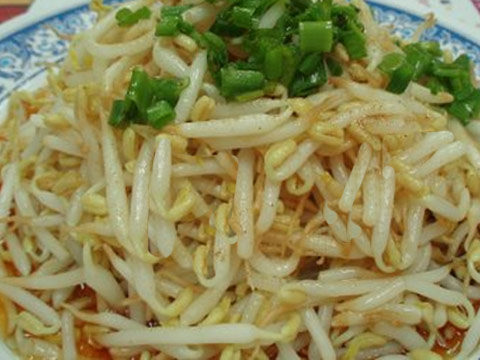
So far, I haven’t mentioned food, and I couldn’t possibly write a whole blog-post about Ipoh without talking about food. Whenever I’m there, the whole town seems obsessed with eating (or perhaps it’s just my family, who will fight traffic from one end of Ipoh to the other for ‘tastier’ Chinese steamed buns or ‘more fragrant’ durians). With Chinese New Year coming up, this really could set me off, so I’d better be careful. I’ll just tell you what I most like to eat when I’m in Ipoh: ‘bean-sprouts chicken’. This dish really is as simple as it sounds, so you’ll think I’m crazy unless you’ve tried it. It comprises a plate of steamed chicken, chopped into bite-sized pieces and lightly seasoned with sesame oil and soya sauce, together with a separate plate of bean-sprouts, also seasoned and similarly garnished with sliced chillies. What, you may ask, could possibly be so exciting about steamed chicken and boiled bean-sprouts?

Well, with Chinese food, it’s often the mix of texture and taste that we look for. And with bean-sprouts chicken, it’s important that neither chicken nor bean-sprouts is over-cooked. When done just right, the chicken simply slips along your tongue, releasing delicious flavours as it does so; if accompanied by a chopstick-full of crunchy bean-sprouts, the effect is hard to beat. Both chicken and bean-sprouts can be eaten on their own or gulped down with Ipoh’s very own rice noodles (‘hor fun’ or ‘kuay-teow’).  

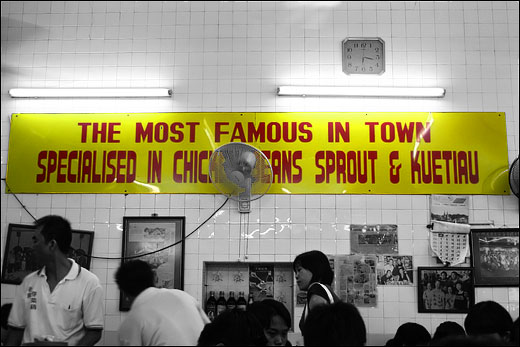
Now, during my seventeen years away, I had completely forgotten about bean-sprouts chicken. My re-initiation into this spectacular dish was somewhat hard. I arrived late on a Friday evening after a week at a fancy hotel in Thailand, and my aunt and uncle took me to Ipoh’s most famous coffee-shop for bean-sprouts chicken. This shop – Lou Wong – has become an institution: it serves nothing but bean-sprouts chicken, and has done so for years. It’s also full every night; you have to queue unless you get there early. Now, what’s important to understand is that traditionally, the Chinese focus in restaurants has been on food and nothing else – not décor, certainly not service, least of all hygiene. There was a rule of thumb that the dirtier a restaurant, the better, because it showed it was popular.

The result was that by the time we arrived at the Lou Wong Coffee Shop, a good fraction of town must already have stepped in. As had other creatures; in one corner, I was sure I spotted a cockroach on the wall. The table tops were so marked that I didn’t dare rest my elbows on them. Yet the cooking smelt heavenly, and I could see the chefs in front of me, chopping their chicken with cleavers and dunking handfuls of sprouts into boiling vats of water. Not being able to resist the food, I opted to put on my sunglasses. Sometimes, see no evil works a treat.

Interestingly, there appears to be a connection between Ipoh’s limestone and its delicious bean-sprouts. I’m firmly of the opinion that Ipoh’s bean-sprouts are plumper and crunchier than those I’ve had anywhere else. And from the number of Malaysian blogs on this topic, I know I’m not alone! Now here’s the connection with limestone: the bean-sprouts are grown in a part of town where the underground water is rich in limestone. Once harvested, the bean-sprout seeds are apparently watered every five hours for five days until they’re judged ready (a fact I’ve gleaned from my Russian partner who’s mad about Ipoh food).

Which brings us once again to limestone and Ipoh’s magnificent hills. I still gaze at them for hours whenever I’m there, the way I used to as a child. I watch the hills in their varied moods – in bright sunshine, after rain, also when partially covered by mist. I see how they change in the middle of raging thunderstorms, when they turn blue with the darkening skies. I know no other Malaysian town with this topology or range of temperament, where the same view looks different every day. I can hardly wait to see those hills again.

18 Comments

Filed under Malaysia, Novel

The Malaysia We’ve Lost

My novel, set in Malaya (now called Malaysia) is multi-layered. I’ve written it in such a way that a reader can enjoy it without knowing any Malaysian history. Of course, the story would be richer for those with some knowledge of the country. Malaysians will see more to the story than Westerners…perhaps even controversy and criticism of present-day Malaysian racial politics.

It’s not intended as such; I simply wanted to tell a powerful and entertaining story. Yet, there’s no denying that at the time the story begins, Malaya was more truly one country than it is today. Which is ironic, because the current Prime Minister has initiated a campaign called “One Malaysia” – 1Malaysia, supposedly to ‘preserve and enhance the diversity which is our strength’. I will explain in this blog-post why the slogan 1Malaysia is farcical when used in today’s Malaysia. Below, I write from my personal experience and understanding.

First, I have to tell you more about Malaysia. Let’s start with where it’s situated. The map below should help. Malaysia is coloured orange and comprises two parts: a western peninsula, and the northern part of Borneo (the island on the right, which belongs mostly to Indonesia). The point to note is Malaysia’s strategic position. India lies to the north-west, China to the north and north-east. Siam (now Thailand) neighbours it to the north, while Indonesia lies directly south. That narrow bit of sea which separates western Malaysia from Indonesia, known as the Straits of Malacca, provides a sheltered channel for ships and is still famous for pirates.

Because of this fortuitous position, Malaysia has been at cultural cross-roads for centuries. Malays themselves are thought to have come from Yunnan in southern China. Traders from as far as Arabia also came, as did Indian princes and of course, some of my ancestors, the Chinese, who arrived in their junk-boats. Nearer home, Malays from neighbouring Indonesia migrated in regular waves, not to mention the south-bound Siamese (modern Thais) on the backs of elephants.

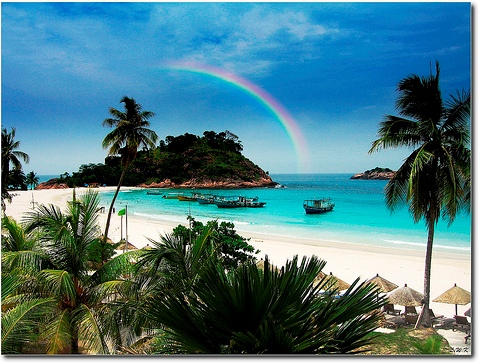
Many of these early immigrants settled in Malaya, which is not surprising – the land I come from is glorious, its people hospitable. It has everything: stretches of sand where palm trees sway, pristine waters always warm to the touch, but also mountains crowned in luscious green.

It’s a piece of paradise on earth. As a result, new communities grew, including mixed-heritage peoples like the Nyonyas.

Then, the British came. (Though there were other Europeans before – Dutch, Portuguese, they’re not important to this narrative). The British arrived in the late 1700s, but their influence reached its nadir during the late 1800s where my novel begins. Under British rule, the waves of migration – which had happened naturally in Malaya until then – were disrupted by the large-scale organised import of labour from India and China. The new workers were needed for the rubber plantations and tin mines which the British opened up.

With all this migration, you might have thought that nobody lived on these lands until the waves of immigrants arrived. Not so, because there are indigenous peoples in Malaysia– the Orang Asli (which incidentally means the ‘original people’ in Malay).

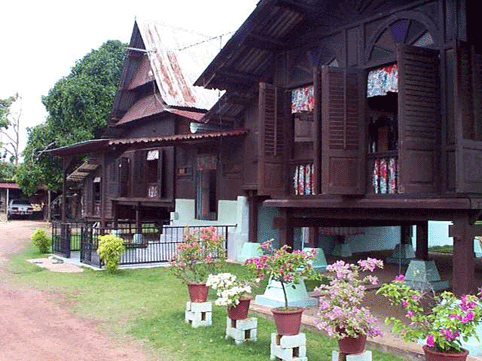
The racial composition of modern Malaysia is: Malay (50%), Chinese (24%), Orang Asli (11%), Indian (7%), others (8%).  As with many multi-cultural societies, each community is famous for certain things – except for the Orang Asli, who have been marginalised. Malays have a refined sense of beauty; just look at their traditional dresses and houses (picture on right, below).

Indians are entrepreneurs and professionals, especially in law and medicine. As for the Chinese, well, shrewd business people who work hard, with many self-made millionaires from among the coolies who arrived during the tin years. In fact, the Chinese diaspora in Asia are called the Jews of the East, our priorities being family, children’s education and business. I know quite a few who say, “Let me do my business. I don’t care about politics”.

With such rich heritage and diversity, Malaysia must be the perfect place to live, right? Just like in that world-famous song from the Malaysian Tourist Board ad campaign – Malaysia, Truly Asia  –where people of different races dance and smile happily? Unfortunately, not quite.

In the late 60s just after I was born, a series of Chinese pogroms happened. Many Chinese were murdered. Actually as soon as I was born, I had to flee Singapore: my grandmother and her maid took me away from my parents to a safer place (near Ipoh), many hours away by train at the time. For two women travelling alone in that time of calamity, it was heroic, and I am so grateful…

And then, on the infamous day 13 May 1969, I remember my father returning early from work. He rushed up, shouting in Cantonese, “They’re killing us!” “Who, who?” my mother asked, and when we heard that Malay mobs were attacking Chinese with scythes and knives, we could hardly believe it. We’d had Malay neighbours, Indian neighbours, all sorts – people who came to our house and drank from the same glasses. In fact, we were living in a predominantly Malay area then, and almost all our neighbours were Malay. We were terrified: if a mob had come to our house, we could have been killed….

No one really knows who caused the incitement which led to these so-called ‘racial riots.’ However soon after – in order to ‘manage racial tensions’ (i.e. to make Malays as rich as Chinese were), racially discriminatory policies commenced which are still in place today. Note that these policies are supposedly justified on the grounds that the Malays arrived in Malaysia before the other immigrants did. Therefore, they are entitled to ‘special rights.’ They’ve even invented a term to enshrine this quality of specialness: bumiputera, which means the Princes of the earth. (Obviously, they couldn’t call themselves Orang Asli, since there were already indigenous peoples.)

These discriminatory policies have been sold as a programme of ‘positive discrimination’ to allow the Malays to catch up economically with the Chinese and Indians. Policy examples:

  • Any listed company to have at least 30% of equity ownership in bumiputera hands.
  • University places reserved for bumiputera, regardless of the academic performance (now modified, but still a two-tier system).
  • For a limited period, a certain percentage of new housing in any development reserved for bumiputera buyers, with developers required to provide a minimum 7% discount to these buyers.

There are plenty of others, but I’ll be restrained here.

Such blatantly race-based policies are bound to have consequences. They have changed Malaysia – and not for the better. Races have become more separated, less friendly to each other, with a cultivated list of grudges. Nyonya culture – that colourful mix of Malay and Chinese traditions, values and beliefs which emerged through centuries of living together and inter-marrying– could never happen in modern Malaysia.

Policies based solely on race are unjustifiable for other reasons.

First, they de facto assume that Malays would be incapable of competing on merit. As a person with Malay blood somewhere down the line, my Great-Grandmother being a Nyonya, I find this insulting (as no doubt do my mixed Malay-Chinese cousins).

Secondly, who cares whose ancestors arrived first on our shores? Surely what is more important is what we can each contribute to building up our country.

Thirdly, it creates the indescribable reality that not all Malaysians are equal. Which is sad, but true. This has played a large part in making it hard for me to come to terms with being Malaysian-Chinese (evidently, though I have Malay blood, I don’t have enough of it).

In the face of all this, how can we even talk of 1Malaysia?

There may well be Malaysians reading this who call me unpatriotic. Some may even say that if I don’t like it, I should go ‘home’. I don’t know where they think my home is; China? My response would be that if they can’t be criticised, they should stop pretending we have a democracy.

Especially for those who question my patriotism, I describe here what it was like for me being back in Malaysia after seventeen years away. I remember the moment well. It was afternoon when we landed. As soon as I stepped outside the airport, a blast of humid air hit me, and I felt the heat seep into my bones. It was such a familiar feeling, even after so many years, that if feelings could be painted, then that moment is forever engraved in my memory. I knew instantly that I had come home.

That moment made me realise my visceral connection with this land in which I grew up. It’s my country too. I will always have this connection, no matter where I live in this world. And no matter what racist policies remain in place in Malaysia. Policies which make me feel unwelcome and unable to live here to the full. Where is home for me?

2 Comments

Filed under Cultural Identity, Identity, Malaysia

In Search of Identity

I had always wanted to write a novel based on my Great-Grandmother’s life, as she was a formidable matriarch whose family’s story reads like the Forsyth Saga. But when I started writing it, I found that for me, it was as much a journey in discovering my own identity. Which is not a simple thing, and I want to explain why in this blog post.

I am a Malaysian-Chinese who grew up inMalaysia. I must have been nine when I read about the ‘Third World’ in the News Straits Times, a Malaysian English language newspaper, and was amazed to learn that Malaysia was considered a ‘Third World’ country. The term didn’t sound nice, judging from what I learnt. I was shocked – because as a child, I thought we were rich and quite developed. Then I noticed that all ‘developed’ countries happened to be those populated by mostly white people which had had colonies in the past. When I was taken to Britain by my mother on holiday, I saw for myself how things were ‘better’ there: the roads were wider, the trains faster, streets cleaner, and buildings more grand. The clear message was that white people monopolised the ‘goodies’ in this world. Not surprising then that I found myself wishing I were white. To the point that I started to hate my Chinese eyes – almond-shaped but lacking the double-crease of Western eyes. Even now, many Oriental women undergo eye surgery to achieve this desired double-crease and there are plenty of places offering such surgery. Here’s an example: a site with a name which says it all – Beautiful Eyes, Asian Blepharoplasty.

Of course identity, being rich and multi-faceted, goes well beyond race. I happened to be born a girl in a misogynistic culture. I was also the first-born, and smart and plucky to boot. Which made many people tell my mother – “Shame she is a girl-lah!” – in that uniquely Malaysian fashion. Fortunately my mother happened to be a feminist before the word was even coined; she stood up for me and this has helped me a lot in life. There were people who didn’t just comment on their preference for boys – they also took action. For example, there was a belief among the Chinese that if you gave away a girl, the next child would be a boy. I know two women who were given away in this way by their families. One was my father’s older sister, who was handed over to an impoverished rubber-tapping family and had to endure a sad life, while the rest of the family were comfortable enough.

Not only was I a girl, but I was also hard-nosed, strong-willed and outspoken, in a culture where people prefer to make oblique references instead of discussing difficult matters head-to-head. When I grew older, I became a theoretical physicist, not a doctor or lawyer – the more typical professions. My own father even told me to forget my fanciful dreams, as physics was for boys. 

As if the above weren’t enough, I then discovered that I was gay. Imagine! Even in my highly Westernised family, no one mentions the ‘H-word’ today, let along the ‘L-word’. Never mind that there is more than one gay family member.

No wonder then, that I felt myself much more at home in the UK, with its liberal and individualistic culture that allows people to be themselves and where diversity is celebrated, thanks to women’s and gay rights movements in particular. I came to the UK to study, and there was a seventeen-year period when I did not return to Malaysia. During that time, I knew I was cutting off an essential part of myself, though I didn’t think about it consciously. The American poet and academic Adrienne Rich has described this feeling very well; she calls it being ‘Split at the Root.’ And when you’re split at the root, a fundamental part of you fails to grow.

Which is what happened to me, until destiny came in the form of a brain tumour. I won’t go into details here except to say that my skull had to be drilled into and my neck muscles torn apart. The recovery night after surgery was such a torture, I didn’t think I would make it. I couldn’t even twitch a muscle without pain shooting through my entire body. As I lay there, I thought only about what was important in life and the people I love. I realised then how much I missed the family I had not seen in Malaysia and the delicious tropical fruit back home. So when my then partner urged me to make a trip, I jumped at the chance. My first time back was in 2000 and I have been in Malaysia once every few years since.

While doing research for my novel, I have spent even more time there recently. Being immersed for prolonged periods thinking about the history of my country, its people and culture has been a very important personal step. What I’m finding is that I’m exploring my own identity as I help my characters explore theirs. In this strange way, the journey of my novel has been intertwined with my personal search for roots. As with any voyage of identity, mine is still in the making. But it has been a thoroughly therapeutic experience so far, and I’m pleased to have started on the road back. Somehow, I know I will find a way to reconcile the woman I’ve become with the culture I come from.

5 Comments

Filed under Cultural Identity, Identity

The Truth about how I Actually Started Writing

In my last blog, I made it sound as if I simply sat down one day and began to write. I must confess that was a slight simplification. It’s true that when I sit down now with a blank page, ideas come to mind and I fill the white space with little trouble. But getting to this point has taken hard work.

Because knowing that I wanted to write a book was the easy part. Thinking how and where to start proved more difficult. First was the question of genre. What sort of book would I write? Historical memoir, fiction or even fantasy? I quickly decided on fiction, as it offers scope with the added advantage of poetic license – my family is full of scandal after all. 

Still, until then, I had only written whenever the mood had grabbed me, which is to say, infrequently. Given those inauspicious attempts, how was I going to embark on a novel?

That was when my partner stepped in. She announced that she knew just the right person: a friend, Dr. Nathalie Teitler who at the time worked as professional editor, poet, sometime academic and consultant. Unbeknownst to Nathalie, we decided to deploy a tried-and-tested Chinese strategy: ply her with food and get free advice (try it!). This strategy only partly succeeded, because when we invited Nathalie to our favourite dim-sum place, we discovered she was a salad lady! We ended up eating all her dumplings, while she did a lot of the talking. She said a good many things, the most memorable being that I had to write every day.

I remember being so shocked that I gulped.  In my own head, writing was something I would do for fun, and certainly not every day!

So initially, I resisted. At the time I was spending my weeks on the “real” business of trading, and I opted to write only on Saturdays. But Saturdays being what they are, things always came up, in the form of meals with friends which my partner would arrange, or invitations to the opera. Fabulous, except I made zero progress on the novel.

On top of that, because writing was on my mind, I suddenly noticed references to the way others worked. For example Isabel Allende, one of my favourite authors, writes between 9 am and 7 pm from Mondays through Saturdays and finishes her first drafts in four months! Ernest Hemingway is reputed to have kept four desks in his house in Cuba, each facing a different direction and used at different stages: one for first drafts, another for the first edit and so on. And Nathalie kept on telling me that even an hour a day was better than none at all.

The more I pondered it, the more I realised she was right. Contrary to popular belief, it’s not only inspiration but also iron discipline and gritty determination, coupled with the crazed belief writers have that people will want to read what’s produced (!), which expel books out into this world. For the first time, I tried to get under the skins of my characters, living and breathing with them. I imagined how they talked, the clothes they wore, their homes, the walks they took, and all this in Malaya of one hundred years ago.

It became an intensely personal journey, because it’s impossible for me to write the story of an Asian woman and not confront the bond which unites us: we are all born into cultures that don’t value girls. I found myself overwhelmed by memories, for example of the many occasions when I heard others tell my mother what a shame I wasn’t a boy. That is a story for another time. Suffice to say that I had to find a way of somehow harnessing this raw energy for literary ends.

That was the moment I asked Nathalie to be my editor. It was a decision which transformed my writing schedule. For the first time, I incorporated writing into my daily routine and gave myself deadlines. I would give Nathalie a chapter as soon as I completed it, and we then met to discuss her feedback. The more immersed I became in my characters’ lives, the more natural it was to sit with them every day.

Of course working with an editor isn’t always easy. Mine happily throws out entire chapters (only once but I’m sure she would do it again), forces me into the type of writing I like least (description in my case) and has never yet admitted she made a mistake (presumably because in art, mistakes are impossible, unlike the real world). On the other hand, she is invariably supportive and gives me wonderful ideas, and I know my book would be poorer without her input.

No sooner had I learnt how to divide my time between trading, writing and going to the gym, than a new challenge presented itself: how to write and keep a partner. This is especially tough given the house rule I’ve instituted: that she cannot speak to me before 3 pm. Fortunately my partner has been amazing so far, despite the odd tweet about her travails. Here’s my favourite:

“Living with a writer means only seeing a 3D picture of them sitting at the table with a laptop. They are far away and cannot be disturbed.”

Oh dear…let’s hope I finish this novel soon.

1 Comment

Filed under Writing

She Arrived on an Elephant – Why I’m Writing my Novel

My novel is based on my Great Grandmother, whom I first heard about when still quite small. I remember being shown a black and white photograph in which a rather plump woman stood, wearing a patterned blouse that was fastened by an enormous brooch. “That’s grandma,” my mother told me simply. It turned out that was the only photo ever taken of my Great Grandmother and it was brown with age even then; it revealed a forbidding-looking woman, someone a child would be frightened of, despite the semblance of a smile on her round face. This impression was reinforced whenever Great Grandmother came up in conversation; with bated breath, the adults around me would exclaim – “Wahh! Very fierce ah!”

I was told Great Grandmother came from Siam (now Thailand) and was a Nyonya, words I hadn’t heard before and which seemed too complicated for my little brain to deal with. For years I didn’t dig any further, content to simply associate the word Nyonya with spicy dishes and with the kueh I enjoyed (see my previous blog post). Those who know me may find this hard to believe, but the fact that there was something I liked eating was actually a big deal – because I hated eating as a child. Every meal was a tortured ritual in which my mother was forced to slowly hand-feed me. I took so long to eat that by the time I finished, it would almost be time for the next meal. The net result was that for me, all meals blended into a single nightmare, so it must have seemed like a gift from heaven to my poor mother when she discovered that I would happily devour Nyonya kueh.

Over the years as I grew up, I remember being told that I was just like my Great Grandmother – stubborn and fierce. The comments weren’t necessarily intended as compliments, and initially they didn’t please me. But they were repeated so often that I became curious about the woman who had inspired them. Eventually I felt I had no choice except to find out more. It was then that I heard how she raised nine children on her own, unaided, with nothing to fall back on except her wits and business acumen. She couldn’t even read and write, but that didn’t stop her from establishing her own business. For a woman in Malaya in 1910, that must have taken guts, something Great Grandmother appeared to have plenty of.

Hers was a story I had long intended to write, but creative writing didn’t fit in with the fast world of finance. I was seldom at home and worked such insane hours, often in far-flung corners of the world, that there was barely time for sleep. Everything else fell by the wayside; in those days writing seemed a hazy dream to be pursued later, a bit like golf.

Then, two years ago, I was diagnosed with breast cancer. Because it was cancer, it meant I had to have not only surgery but also radio- and chemotherapy. For someone with needle-phobia who doesn’t take any drugs and faints at the sight of blood, the entire process proved very stressful – although I didn’t feel it at the time. It was only after my treatment had finished that I realised life had changed. For months afterwards, I felt adrift. No matter how much I slept, I couldn’t seem to regain my previous energy. My confidence waned, and there were days when I wondered if I could ever be the person I once was. I knew then that I had to alter the way I lived.

As a result, I began to do things I never did before. I stopped rushing around. I scaled down my business. And I discovered writing. I had heard about cancer survivors who had found a lifeline through creative self-expression, activities like pottery or singing, as well as writing. At a low-ebb one day, I simply sat down with a blank Word page and just started typing. Magically, as the sentences flowed, I could literally feel myself getting better.

Within two months, when I asked myself whether there was anything I would regret not having done if my life were to end tomorrow, I knew at once what the answer was. It was clear then what my next project had to be. Great Grandmother had already waited far too long.

8 Comments

Filed under Cultural Identity, Identity, Malaysia, Novel, Nyonya, Writing

My Great Grandmother’s Cakes…

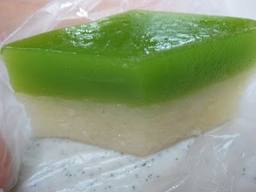
 …well, not literally. These are modern photographs, and sadly, not my own, but they convey the wonderful colour and intricacy of the ‘cakes’ my great grandmother would have made.

The ‘cakes’ feature heavily in my novel, as does the cuisine of the Nyonyas (explained below) – to the extent that my editor wryly told me one of the chapters made her very hungry! Which I took to be a good sign, given that I didn’t include pictures in my draft.

Now here’s what’s interesting about the ‘cakes’, which I will refer to henceforth by their Malay name of ‘kueh’ : they are wheat- and dairy-free. This makes them perfect for those of us who wish to avoid gluten and animal milk. Alas, I have to say the kueh are not for the weight-conscious, because they generally include copious amounts of coconut milk, coconut cream or grated coconut (sometimes all three!) as well as palm sugar (that lovely semi-viscous brown stuff you want to stick your fingers into). So the kueh may help with allergies, but not with girth…

Before I write more about the kueh, I should say a little about the formidable women who created them. The kueh you see here weren’t made by just anyone – but by a small community of women in Malaya known as the Nyonyas. This is important in my novel because the main character is a Nyonya (just like my great grandmother on whom the character is based). Therefore, the cakes the women made are known as Nyonya kueh. Which begs the question: who were the Nyonyas? 

The short answer is that they are women of mixed Malay-Chinese heritage going back centuries (from the time Chinese traders first arrived on the Malay archipelago). The timeframe is important, because there may be many people with mixed heritage, but very few have managed to evolve a community with a culture as distinctive as the Nyonyas’. The Nyonyas succeeded by combining local Malay values and customs with the beliefs and traditions of their Chinese husbands, in very particular ways. For example, the women – who were Moslem – took on the religion of their husbands, converting to Taoism. I mention this because religion played an important role in Nyonya life, and bowing before an altar table, lit joss-sticks in hand, is a recurring theme in my story. 

Of course in modern Malaysia, the fact that local Moslem women were able to convert from Islam to another religion, is never discussed. (It isn’t allowed today; today in Malaysia, if you’re born a Moslem, you remain a Moslem).  Which is another reason why Nyonya culture is so unique and fascinating: it developed during a time when Malaya truly was one. I will have more to say about this in a later blog. Watch this space!

Now, to come back to Nyonya kueh. There are many varieties, all delectable and delicious, and some have symbolic significance. For example, the red ones below (angkoo) are traditionally given to relatives and friends to celebrate a baby’s first month on earth. I remember my first taste of angku when I was three: how the skin, made of glutinous rice flour and sweet potatoes, felt soft; the filling, of crushed mung beans, even softer, and bursting with flavour. I didn’t know what the flavour was at the time; now I’ve learnt it’s the scent of the pandanus leaves with which the beans are steamed. Simply delicious!

So, with all these varieties, you may well ask why I haven’t made any Nyonya kueh yet. The answer is partly because I fear the work, Nyonya cuisine being notorious for its sheer labour (when done properly, with no shortcuts), and partly because I haven’t had time to source the necessary ingredients in London. I’m referring here to exotic things like pandanus leaves, green pea flour, and natural colourings from for example, the clitoria flower (I haven’t made that up). Once I’ve made my first batch of Nyonya kueh, you’ll be the first to see the results!


9 Comments

Filed under Cultural Identity, Identity, Malaysia, Nyonya

Hello all!

I’m now two thirds of the way through the first draft of my novel – very exciting! For those who don’t know, my novel is an epic drama based on my Malayan family’s story. So although it’s fiction, the underlying story is true. It starts in Ipoh with a Nyonya matriarch (a character based on my great grandmother), then moves to London with the matriarch’s eldest son (a character based on my grandfather) who arrives in London in the 1920s for studies.

As part of my research, I managed to track down my grandfather’s former college. The picture below is what it must have looked like when he was there.0256

The Battersea Polytechnic Institute is no longer around, but its archived materials are held by the Battersea Library, where I spent the whole day this past Wednesday (October 19th), trawling through hand-written ledgers of every student on every course in the 1920s, as well as examination lists from 1924! What a thrill it was to see my grandfather’s name…I thought of how amazing it was that my grandfather should have arrived on these shores to a very different Britain, and here was I, his grand-daughter, a century later, digging through records which showed exactly which examinations he failed (!)

The records were a hodge-podge…student rolls, financial ledgers, prospectuses, student magazines…many bound in vellum so old, tiny particles of colour fell off when the volumes were placed on the special cushion onto which they had to rest while I browsed through. There were times I held my breath, lest my touch proved too much for these tomes that had lain dormant over the years. I loved looking at the photographs especially – men in white shirts and ties and suits, stiff in their starches even on the golf course, and women with so many layers and frills, it was astonishing they could move. All in, a great look into a bygone time, thanks to the wonderful heritage service offered by Battersea Library.

10 Comments

Filed under Research