Category Archives: Writing

Tan Twan Eng, the Garden of Evening Mists and Memories of War

I’m always on the lookout for writers and artists from Malaysia. I get a particular thrill when a piece of literary or artistic work reflects Malaysians as we are, in the places we know and love. It is rare to come across such work outside Malaysia. So when it happens, and the work then goes on to achieve international recognition, I’m doubly excited!

This is what has happened with Malaysia-born Tan Twan Eng. (Surname: Tan, name: Twan Eng. See my blog-post What’s in a Chinese Name?). His two novels have both been long-listed for the prestigious Man Booker Prize – a remarkable feat. I first heard of him in 2007 when his début novel The Gift of Rain was published in the UK. A former banking colleague had recommended I read it. “It’s beautiful,” he told me. He was right. The Gift of Rain is set on the magical island of Penang, home of sandy beaches and swaying palms. The story in it unfolds in lyrical prose as light as stardust.

Yet, Tan Twan Eng is not especially known in Malaysia. This is a shame – because his work ripples with themes Malaysians would find interesting.

To begin with, both novels are about the War and its aftermath. For Malaysians, there is but one War: the Second World War – when Malaya was occupied by Japanese forces. This occurred between 1941 and 1945. Roughly seventy years may have passed, but we continue to be affected by the events which took place then. They changed Malaya irrevocably, in ways we are only beginning to explore and understand.

I know I was obsessed with stories from the War era as a child. Whenever my now-dead maternal Grandmother visited, I would beg her to tell me what the War was like. She would sit, as calm as a lake on a still night, and in her deep voice, would tell me things I simply could not imagine. Soldiers rapping on doors and windows, looking for girls and women; men being rounded up, forced to stand in 30+ degree Celsius heat with no water; the screams that could be heard from one of the hospitals in Ipoh, where the Japanese had set up a torture chamber; heads on spikes, on full display at the front gates of Ipoh’s Central Market as a warning to the headstrong.

I thought I knew much about the War. Yet, both The Gift of Rain and Garden of Evening Mists, Tan Twan Eng’s latest novel, taught me new things.

For example, I grew up believing that the British Colonial administration had done its very best to defend our country. Not so, according to The Gift of Rain, and my own research confirmed this. Much has been made of the Malayan Campaign. But if we cut through it all, here is the bald fact: Britain largely abandoned us to the Japanese. Japanese forces attacked the north-eastern coast of Malaya first, before swiftly marching across the country: westwards and southwards, over mountains and across jungle our Colonial rulers had said was impenetrable. Yes there were battles – mainly in support of retreat – unlike in Europe, where the British army fought for every inch of ground, to the death. In Malaya, the Colonial troops retreated…and retreated…until they reached the island of Singapore and there was nowhere else to go. At that point, some hopped onto ships bound for Australia, following their women and children. Those who didn’t leave on time were captured when Singapore fell.

I was sorely disappointed by what I learnt. It still rankles today. The only thing I can do with my feelings is to write about what happened.

I imagine Tan Twan Eng must have been similarly affected, though he has worked wonders to weave history into his stories easily. His writing doesn’t feel dense, nor is there any rancour. Amazingly, each novel incorporates a Japanese central character. In Garden of Evening Mists, this happens to be the Emperor’s gardener; in The Gift of Rain, it is an aikido master. Tan himself has first-dan ranking in aikido, and has obviously studied Japanese thinking. He manages to convey some of its Zen-like mystery and beauty through slow, deliberately measured prose, so that even the positioning of stones within a garden becomes pure poetry.

Garden of Evening Mists tells the story of a young Malaysian-Chinese woman, Yun Ling, who goes on to become a lawyer, but who cannot forget the War. After graduating from Cambridge, she takes leave to learn the art of creating a Japanese garden from a man who was the Emperor’s gardener. This fictional garden is located high up in the Malaysian hills, in Cameron Highlands, a dreamy place once shrouded in jungle and mist. It was developed because it reminded British Colonialists of their home. Yun Ling hopes the creation of a garden will be cathartic; instead, it adds layers of intrigue and pain she only comprehends years later. 

Japanese themes also echo in The Gift of Rain. A Eurasian boy, Philip (Note: By Eurasian, I don’t mean someone from that piece of land known as Eurasia, but a person with one European parent and one Asian parent), who lives in Penang, is befriended by a Japanese man, Endo, before the War. Philip is taught aikido by Endo. Perhaps I read too much into it, but what develops within Philip is a depth of feeling which struck me as homo-erotic. (Though I stress this isn’t a ‘gay’ novel.) Philip learns not only aikido, but also the Japanese language. Then, the Japanese arrive, en masse. You will have to read the book to find out what happens to him, his family and Penang.

Incidentally, there is an explicitly gay character in Garden of Evening Mists. I mention this because it shows me that Tan Twan Eng isn’t afraid of tackling a subject we in Asia prefer to avoid.

Like a good story-teller, Tan Twan Eng folds his own experiences seamlessly into his writing. Having lived in Cape Town for the past few years, he inserted an Afrikaner into his latest book. There are therefore plenty of lekker braais (delicious barbecues) alongside descriptions of Cape Dutch houses and flora. And these are all made to fit into Cameron Highlands!

Reading Tan Twan Eng has inevitably made me reflect on my own work. My current novel deals with an equally dramatic period for Malaya – the years after colonisation but before the War. It was a time of great change: cars and airplanes came to Malaya then, Malayans started to learn English and many families became westernised. There was also a Japanese community in Malaya, whom we later learnt were spies. Many were photographers; one of them features in my novel towards the end, just before the eve of the Japanese invasion, when the matriarch in my story dies.

I had always intended my novel to be the first in a trilogy, with the second in the series focusing on the impact of the War years on a particular family in Ipoh. Reading Garden of Evening Mists has made me realise how much is left to explore…What an incredible life this is.
2 Comments

Filed under Malaysia, Novel, Research, Writing

The Miracle of Writing

“Do you write when the inspiration takes you?” you ask. No, I say, I write every day, whether inspired or not. Otherwise, I’d never finish my novel. You look surprised. It’s obviously not what you expected to hear.

I am perhaps fortunate, I add. Some people say they find it hard to begin writing. I have no such problem. I simply sit in front of my machine, and write. Just like with this blog-post.

The act of searching for words, of putting them together to form sentences, does something to my whole being. When I write, it’s not just my brain which is engaged – it’s also my heart. I see what my characters see, feel what they feel. Writing awakens my soul.

With each word comes a new idea. Or a memory long cast aside. Often, the thoughts and ideas and memories appear in random order, yet there are nebulous connections between them, strange pathways I can use or store as I wish. Sometimes, it’s not a thought I tap into, but the reservoir of emotion I know is there. The act of striking little black keys on a silver board unleashes a side of my psyche that has been kept in check for many years and can’t wait to be let out.  

It isn’t always so. In everyday life, I often can’t find the words. But when I write, I inevitably find the words. Even if it takes half a year.


The words sometimes come in dreams. I have only ever remembered a handful of dreams, yet I’m conscious of writing parts of my novel when I sleep. Or of adding to and subtracting from it, as I’m doing now. I will wake up with the exact phrase I had been searching for, which happened to come while I was still asleep. It’s uncanny.


I’ve known for a long time that I have some sort of talent for creative fiction. When I was nine, I was runner-up in a national essay competition in Malaysia (in the English language). There were only two submissions from my school: mine and a classmate’s. We both wrote about tragedy; my essay was about a girl who survives a plane crash, his about two children who are involved in a boat accident with their father. Mine was pure fiction, inspired by the tale of the survivors of a plane crash in the Andes. My classmate’s story, on the other hand, was based on his first-hand experience of surviving a terrible boat accident in which he watched his father drown while trying to save him and his sister. I still remember the title of his essay – Labyrinth of Fear. I handed my story in and thought no more about it. To my amazement, I was named runner-up nationally while my classmate was left without a prize. I felt embarrassed at the result. How could a made-up story trump real-life experience?

I thought of giving my classmate the trophy I won, but something held me back. 


As I grew up, I put story-writing away. There were too many other things in life. I continued to write, but only articles full of facts and figures. In the early years, they had titles like ‘The Quasiparticle Lifetime at the Mobility Edge’; later on, they described companies and the different elements of capital that could fund them. My pieces were lengthy tomes which required grammatically correct sentences, proper syntax and punctuation, but which had neither soul nor heart. In them, the equations and facts were more important than the writing. Yet, it was my words which stood out. Colleagues would comment on how well I wrote. I acknowledged their praise before promptly moving on. There were still too many other things I wanted to do.


Somewhere inside though, I must have stored all the words I have ever heard in my life. Because when the moment came, I was able to retrieve them.      


It started on a low day. Months after my final chemo session, I felt desperate. My hair had come back, but my energy hadn’t. What is life, I asked myself, without energy? When you lack the energy to move, life passes by in slow grinding motion. I slept, woke, read, went back to sleep, woke again, listened to the birds in the study, returned to sleep. Always, sleep overcame me, as if I had never slept before chemo and would never sleep enough again afterwards.

I couldn’t understand why it was so hard to regain my footing. My body had survived the ravages of illness and of drugs, and I was supposed to be well. Yet, I felt far from any state of equilibrium. “Why don’t you write?” my counsellor at MacMillan Cancer Support suggested.   

Reluctantly, I began. I felt all of the inertia which writers speak about, the resistance to sitting down with a blank page. It was a beautifully sunny autumn afternoon. I made endless cups of tea before carrying my laptop into the dining room where I wouldn’t be disturbed by the chirping of birds. I had only a vague idea what I would write about. Just start, my editor friend had said. So I did. I embarked on a short story involving four students who shared a house in a university town.

And then an extraordinary thing happened: I became immersed in the world of my characters. When I next went to the gym, I found myself imagining the scene to come, tweaking words in my head. I couldn’t wait to get back to my story.

In the fifth decade of my life, I finally experienced that cliché known as the creative spark. With every word I wrote, I felt my body becoming stronger. I commenced on a novel that had long lain dormant, and by the time I had written three chapters, was a rejuvenated person. Writing became as natural as breathing. No longer could I sit back in this life and not write. I now have to write to live, and to suffer all the consequences of this art in their full-blown form.


Ichtyandr is a young boy who needs a life-saving operation to survive. His father, a surgeon, implants a set of gills onto his lungs. Thereafter, Ichtyandr is able to live in both water and on land, but he must keep this a secret from his friends in Argentina where he has his home. He moves surreptitiously between two worlds: one full of beaches and open fields, the other a silent world in which the only sound is the gurgling of his breath.

Invented by Alexandr Belyayev, Russia’s equivalent of Jules Verne, Ichtyandr appeared in the novel Amphibian Man in 1928. I often feel like Ichtyandr as I scurry between the folds of my imagination and the vast terrace of day-to-day existence. My real life is quiet, while the world my characters inhabit is full of noise, and bustle, and people…always so many people everywhere. It is also full of food – that central plank of Malaysian identity – and I’m constantly hungry when I write. I smell the garlic and lemongrass being pounded in a grey granite pestle-and-mortar, see the juicy roasted ducks hanging on spits. Unwittingly, like one of Pavlov’s dogs, I will taste the saliva in my mouth. “What to do lah?” as one of my characters would say. “Of course must eat!”


Sometimes, being in two worlds or even three makes me schizophrenic. I can understand why writers become cranky. It forces me to look at Malaysia and at myself in a new light. I often imagine the characters in my novel as they would have moved around Ipoh, the tin mining town in which my story is set, a hundred years ago.

They were all alive then, going about their lives in rickshaws. If they could see Ipoh today, they would be astonished by the changes. There are many things I think they would love, and also much that would make them sad, as I am sad.

But sadness is not what I wish to dwell on here. Rather, I want to describe the sheer exhilaration of being able to tell the story I’ve kept inside my head all these years. I make up characters and sometimes I kill them; I find the words, thread them into sentences, move paragraphs around.

All this I do, so that I can guide my reader into a world that once was, down the very street she or he may still live on.

“You write and you erase. And you call this a profession?” says Nicole Kraus in her novel Great House.

No, I don’t call it a profession. I call it a miracle. And I’m thankful I have the vitality to share in this miracle, however imperfect my participation may be.

4 Comments

Filed under Identity, Malaysia, Novel, Writing

How to be a Good Daughter-in-Law

I had the good fortune of speaking to Malaysian writer Lee Su Kim during my recent trip. What that has to do with being a good daughter-in-law will be revealed in good time…

With Lee Su Kim, I share a fascination of things Nyonya and a love of reading and writing. She started writing long before I did, and has had several books published. Su Kim also happens to be a founder member of the Peranakan Baba Nyonya Association of Kuala Lumpur and Selangor, and its first woman President. Demonstrating true grit, Su Kim very kindly called me up despite being on her way to see a doctor!

Being a Nyonya herself, it’s not surprising that Malaysian as well as Nyonya themes run through her work. The fact that I heard about Su Kim at all was purely down to luck. My aunt happened to attend the launch last year of her latest book – a lovely collection of short stories entitled Kebaya Tales, published by Marshall Cavendish.

As I worked my way through the book, I realised how much I enjoyed reading it, which was why I set out to contact her. I could see how much of herself Su Kim has put into Kebaya Tales – the book comes across as a labour of love. In addition to stories, she has included personal mementoes: family photographs, shots of the vintage kebayas – the beautifully embroidered blouses in diaphanous material worn by Malay women and Nyonyas – which she inherited from her mother, as well as pictures of the beaded slippers for which Nyonyas are famous. All of these help make her culture come alive to a reader with no previous knowledge of what Nyonya means.

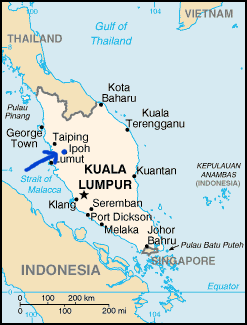
On the subject of beaded slippers, when I was last in Malacca, I bought two pairs of these. (As an aside, Malacca was at one point an important port; see map below to understand its strategic position.


Which also explains why it is one of Malaysia’s most historical towns and has a large Nyonya population). 

To get back to the famous beaded slippers, here’s a photograph of the pair which I gave my partner.

You may not be able to see them, but the top of the shoe comprises tiny beads in many colours. The beads are patiently threaded together to create the flowers and butterflies which adorn the black background, itself made up of the same tiny beads. The smaller the beads (which this shoe happens to have), the greater the expertise required, and the greater the patience demanded. At one time, beading was considered a required skill for a Nyonya, one on which a potential daughter-in-law could expect to be severely judged.

As for the stories in Kebaya Tales, Lee Su Kim succeeded in drawing me in and sometimes, in shocking me. Her tales contain unexpected and occasionally disturbing twists, but she invariably managed to weave in some or other aspect of Malaysia. A few stories touch on folklore, others on parts of our history which remain unresolved, such as what happened during the war years, yet others contain unspoken beliefs which permeate our culture.

However, you don’t need to be a Malaysia expert, because the stories provide easy reading. The collection is also totally self-contained; Su Kim even included brief notes about the Nyonyas as well as ample commentary about their kebayas and sarongs.

What, you may ask, does any of this have to do with being a good daughter-in-law? The answer is that in addition to the mementoes I mentioned above, Kebaya Tales is interspersed with fragments of idioms and poetry. The following ditty, itself taken from a book by another Malaysian writer, caught my eye:

HOW TO BE A GOOD DAUGHTER-IN-LAW

Dried bean curd, sweetened buns,

To be a good daughter-in-law, know your manners,

Go to bed late, get up early,

Comb your hair, powder your face, dab on rouge,

Enter a room holding a needle,

Go to the main hall and wash the crockery,

Praise your elder and younger brothers-in-law,

Your parents in turn will be praised for your good upbringing.

Hokkien ditty, reprinted in Kebaya Tales, taken from the book Of Comb, Powder and Rouge by Yeap Joo Kim 1992, published in Singapore by Lee Teng Lay Pte Ltd

I re-read the ditty above many times, always laughing. It amused me to see how miserably I would have failed! Based on the above criteria, I make a lousy daughter-in-law. Praise be to the Heavens.

4 Comments

Filed under Cultural Identity, Identity, Malaysia, Nyonya, Writing

When Resemblance to Real People May Not be Coincidental

A year ago, I began writing my novel. I completed the first draft three days ago – twenty three chapters in all. I thought I would be relieved; instead, I’m numb. When I look back, I see a cycle of dreaming, writing, research…inventing, followed by more writing…followed by more research. Even now, I’m carrying out research in Malaysia, hoping to weave small details into my story. What I’m looking for are the simple everyday things we forget about, because they become as natural as breathing. To find these hidden gems, I’ve had to deploy methods that were at times unorthodox (though perfectly legal). This blog-post is about how I gathered such pearls.

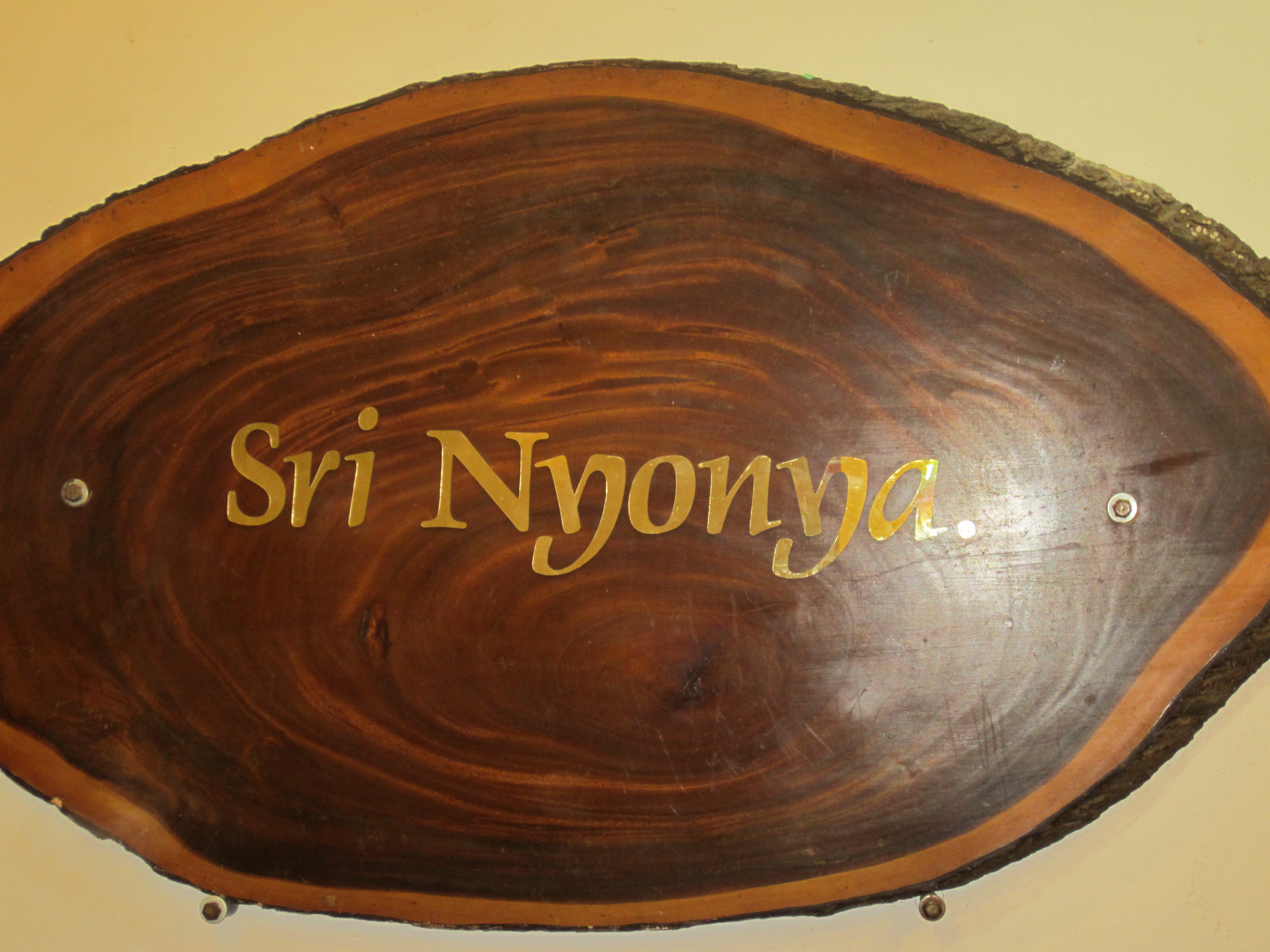
Aunt Lorna at Sri Nyonya

The first victims in my quest for authenticity were my family. This seemed natural, because all I had a year ago were a rough story-line and the raw passion to tell a story linked to Great Grandmother. I conducted interviews with every single family member willing to talk: uncles and aunts, grand-aunts, my mother. They would see me coming with a little black case; it contained an Olympus digital voice recorder, a present from my partner, an apparatus no larger than a small Nokia handset – but extraordinarily powerful. Once, I put it in the middle of a large dining table at Sri Nyonya, the Nyonya restaurant in Petaling Jaya run by my aunt Lorna (see picture) and uncle James, and was pleasantly surprised. Amidst the clanking of bowls and howls of laughter, I could decipher every word that was said.  

While speaking of Sri Nyonya, I can’t avoid mentioning food. Nyonya cuisine plays a pivotal role in my story, and learning about its intricacies formed an important part of my research. Needless to say, eating was equally important. I could hardly have found a better place; the recipes at Sri Nyonya have been passed down for generations – and it’s run by family! 

Through good old-fashioned talking, I learnt about Great Grandmother and the Malaya of times past. The best anecdotes came unexpectedly, spurred by the jerk of recollection, the sort we tend to have once our memories are stirred. In the middle of one conversation, an aunt blurted out, “Very naughty boy-lah! Make my mother so sad…,” about her own father, which of course caused my ears to prick up. I then heard what the naughty boy got up to, and carefully stored the story to see what I could do with it. For a while, that was my modus operandi: listening, transferring what I’d heard onto my laptop, jotting down notes. It might have been different with a less loquacious family, but fortunately mine loves to talk.

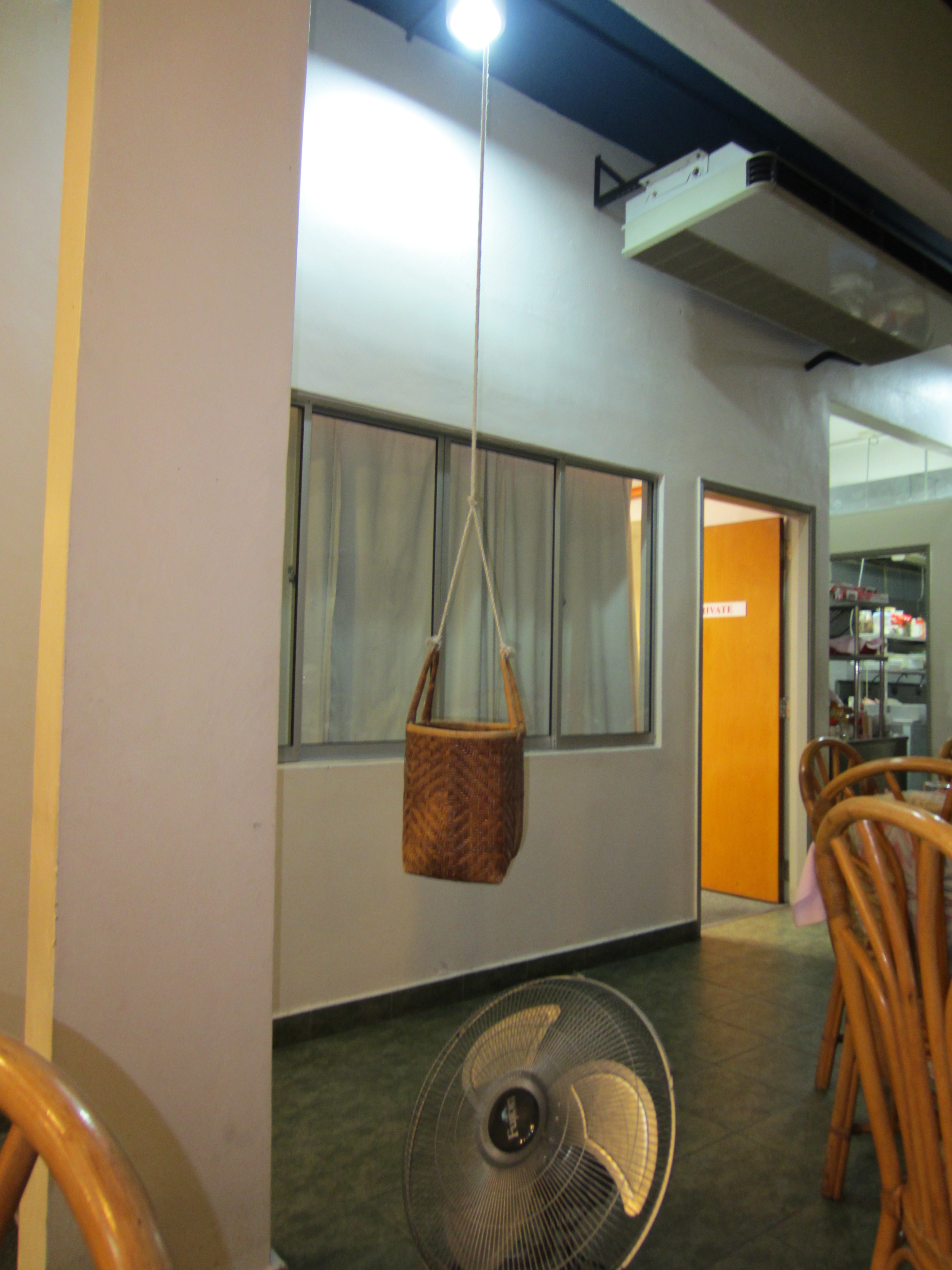
My relations were able to make their childhood years come alive in a way no history book ever could. For example, my cousins reminded me of the ingenious pulley system that was used in old Chinese shops (there’s a modern version in the internal courtyard at Sri Nyonya – see photo). A basket suspended on a piece of strong rope which was looped around itself allowed residents on the top floors of the two-storey shop-houses to buy goods without having to descend staircases. If their favourite street vendor passed, residents would shout out of their windows for what they wanted. These could be dry dishes, such as bundles of aromatic rice wrapped in fragrant banana leaves, or wet food, bowls of noodles say. After calling out orders, the people upstairs would lower their basket with a plate or bowl and the necessary coins, and a few minutes later, haul up their basket, noodles and all, with change for their money.

Of course, I didn’t just rely on memories; I also went to the National Archives in Kuala Lumpur, where I spent hours scanning old newspapers to get an idea of what people were reading at the time. Though thin, the papers contained so much gossip that it took discipline not to digress. This is where I acquired fascinating insight into the topics which vexed our colonial rulers. In 1892, the government of Penang (see map) was exceedingly alarmed about an outbreak of cholera – thousands of miles away in Europe.

Map of Malaysia

I learnt things about my country which had been omitted from our history classes.For example, that the British colonial government in Malaya sold opium indirectly to generate revenue, and very openly (while simultaneously banning its import into Britain). It was even accepted practice for the government of the time to place advertisements for opium concessions in leading Malayan newspapers! The 1892 editions of the Penang Gazette advertised one such concession in the state of Perak (where most of my story unfolds). According to the advertisement, the concession gave its holder “the exclusive right to the importing, the manufacturing, sale and licensing others to sell, of chandu (opium), opium dross, and spirituous liquors, free of duty.” I was horrified.

Yet this practice fitted very much with the tenor of that era. The colonial atmosphere is detailed in the book When Tin was King, which charts the rise of Ipoh (more or less in the centre of Perak on the map) as a mining town. During the tin rush which began in the late 1800s, all sorts of adventurers were drawn by the lure of tin. The situation in Ipoh was reminiscent of the gold rush, and it’s no exaggeration to call Ipoh the San Francisco of the East. At the time my story takes place, the area in which Ipoh is located was the world’s largest producer of tin. The metal transformed Ipoh from a sleepy fishing village into a metropolis, and When Tin was King outlines how this happened in entertaining fashion. I was fortunate to have been introduced to its author Dr. Ho Tak Ming, a family physician with a vast knowledge of local history, who has kindly answered many questions.

I must confess to not being the first writer in my family, nor the first to pen Great Grandmother’s story. That honour belongs to my late grand-uncle Chin Kee Onn, whose novel Twilight of the Nyonyas, published in Malaysia in 1984, shares a similar story-line with my own. Thereafter, the similarities end. My story begins in 1878, his in 1915. I’ve told the story from a woman’s perspective, he from a man’s point of view. It’s no surprise we explore different themes; my novel is about a woman’s struggle for survival and her battle for identity. I also explore the consequences she has to face when she spoils her sons. Despite our differences, I owe a debt to my grand-uncle for his book, which at the time of publication, was the first novel ever written about a Nyonya family. I’m grateful to him for leading the way.

My research sometimes went down amusing paths. Because the main character ate everything with her hands, including the Nyonya curries she was so fond of, it occurred to me one day that I should try to do the same. With much enthusiasm, I rolled a ball of rice dipped into gravy in one hand – it looked so easy when I watched an Indian friend do this. Yet, as soon as I tried putting the ball into my mouth, gravy dripped all over my elbows. I gave up after a second attempt, deciding that this wasn’t for the uninitiated.

Then there were the children, of which my central character had plenty. Given the themes I wanted to explore – a woman’s survival and struggle for identity – it seemed appropriate to describe a birth scene. The only problem was my own lack of children. Much as I like children, having a child for the sake of a book seemed excessive. Attending a live birth was out of the question, since I faint at the sight of blood. So I did the next best thing: I interviewed as many friends and family I could find, especially those with three and more children. I also spoke to a nurse in Malaysia who told me in vivid detail the practices of old. In the process I heard amazing stories; I only hope I’ve done justice to them all.

A large family with no illness would be unrealistic, which is why it doesn’t happen in my story. When I needed medical information, I turned to neighbours in London. Veritable doctors, they happily described every conceivable consequence of the illnesses I was asking about. They then plied me with photographic evidence to show how horrible things could become. I ended up borrowing their medical text and staring at grotesque images for several weeks.

That was just before re-visiting Malaysia, where I’ve now completed the first draft of my novel. When I survey the result, I’m a little nervous. Because I know I’ve applied a writer’s prerogative, which is to say that I’ve exaggerated, added embellishments and generally used poetic licence with what I’ve heard and read (except in relation to historical facts and real figures who are named in the story). My creation is a fictional account, but one in which resemblance to real people isn’t entirely coincidental!

It was my partner who spurred my worries. She shot up after reading the latest chapter, telling me how amazing it was to recognise family members she knows from among my characters. Hmmm. It made me wonder how my own family would react. I’ve always told them I was writing fiction, which is true – up to a point. But it doesn’t stop me from worrying that they may not like the characters their relations have become, or their own prototypes have become, or the secrets I reveal, some true, others invented. I only hope they will see my novel for what it is: fiction with a large dose of reality, in which we Malaysians can see ourselves reflected. That after all, is what my research has been for.

6 Comments

Filed under Novel, Research, Writing

The Story of Nu Kua – Excerpt from my Novel

This blog-post is rather special since it’s the first I’m writing from within Malaysia itself – the land in which my story unfolds. To mark the occasion, I thought I’d provide a short excerpt from the novel itself.

My novel tells the story of a Nyonya (mixed heritage) woman as she struggles for some of the fundamental things in life: survival – her own as well as her family’s – and a meaningful identity. For my main character, whose name is Chye Hoon, the struggle for survival and the struggle for identity are linked; to find out how, I’m afraid you’ll have to wait for the book!

Set in the multi-cultural Malaya of roughly 1880 to 1940, the narrative is rich in descriptions of food and places in Malaya, with historical events being alluded to as they happen. In addition, I have woven Chinese and South East Asian mythology into the narrative where possible, usually in the form of stories passed from mothers to children.   

The following passages are one such example. They appear relatively early on, when the main character Chye Hoon, also the narrator, has just borne her second child. She’s up early one morning to feed him when she recalls a story her own mother once told her.

© Copyright Siak Chin Yoke 2012

As I dragged myself up to feed the latest child, cradling the little one to my breast, watching him suckle greedily with the stillness of morning all around us, I finally understood the heroic efforts Mother had made, and the toll which raising us must have taken on her life.

I felt so close to her then – because I knew that I too, was doing exactly what she had done.

I had also begun to tell my children stories, just as Mother used to. It’s probably because I was thinking so much about her while feeding Weng Koon one night that I suddenly recalled a tale she had told. For no obvious reason at all, it jumped into my mind and refused to go away. It was a fable so long forgotten that at first, I struggled to recollect even its bare outline.

It was the name which came back first. Nu Kua. I couldn’t recall who she was, one of the goddesses perhaps. Or maybe she was more than a goddess? I tried to cast my memory back to the day when Mother had first told us her story. Slowly, the haze of years lifted, and details started to come, bit by bit; once more, I could hear Mother’s lilting voice as she told us the fable, carefully enunciating every word. I remember watching the movement of her lips that day, when all of us children were sitting on the floor, looking up at her, rapt with attention.

Mother had called Nu Kua the divine mother of all humans. She said Nu Kua had come down to repair the sky a long time ago, after a great battle in which the monster Kung Kung had wreaked havoc. During this terrible battle, the earth started falling into itself, mountains were flattened, the oceans overran many lands and everywhere, there were fires which burnt night and day, raging out of control. The chaos caused the earth’s points to be misaligned, and a large hole was ripped right across the sky. On seeing the destruction, Nu Kua became very sad. She knew she would have to repair the damage, for the sake of the earth’s children. Holding five coloured stones in her hand, she calmed the waters, put out the fires, and repaired the sky. Then she said, ‘The sky will now be blue, as an eternal symbol of hope for the children.’

I smiled as I recalled this story, because I had immediately shouted out, “But where is the hole Mother?” in a loud voice.

“It’s not there anymore, Nu Kua repaired the sky.”

“But where was it before she repaired the sky? Can you show me?” I asked insistently. “Maybe we can see where the sky was torn,” I had added in a voice full of hope. For many weeks, I remained fascinated by the idea of a hole in the heavens; with a hand shielding my eyes from the glare, I would survey the Malayan skies, constantly disappointed that all I could see were the fluffy white clouds that floated freely above.

© Copyright Siak Chin Yoke 2012

1 Comment

Filed under Novel, Nyonya, Writing

The Truth about how I Actually Started Writing

In my last blog, I made it sound as if I simply sat down one day and began to write. I must confess that was a slight simplification. It’s true that when I sit down now with a blank page, ideas come to mind and I fill the white space with little trouble. But getting to this point has taken hard work.

Because knowing that I wanted to write a book was the easy part. Thinking how and where to start proved more difficult. First was the question of genre. What sort of book would I write? Historical memoir, fiction or even fantasy? I quickly decided on fiction, as it offers scope with the added advantage of poetic license – my family is full of scandal after all. 

Still, until then, I had only written whenever the mood had grabbed me, which is to say, infrequently. Given those inauspicious attempts, how was I going to embark on a novel?

That was when my partner stepped in. She announced that she knew just the right person: a friend, Dr. Nathalie Teitler who at the time worked as professional editor, poet, sometime academic and consultant. Unbeknownst to Nathalie, we decided to deploy a tried-and-tested Chinese strategy: ply her with food and get free advice (try it!). This strategy only partly succeeded, because when we invited Nathalie to our favourite dim-sum place, we discovered she was a salad lady! We ended up eating all her dumplings, while she did a lot of the talking. She said a good many things, the most memorable being that I had to write every day.

I remember being so shocked that I gulped.  In my own head, writing was something I would do for fun, and certainly not every day!

So initially, I resisted. At the time I was spending my weeks on the “real” business of trading, and I opted to write only on Saturdays. But Saturdays being what they are, things always came up, in the form of meals with friends which my partner would arrange, or invitations to the opera. Fabulous, except I made zero progress on the novel.

On top of that, because writing was on my mind, I suddenly noticed references to the way others worked. For example Isabel Allende, one of my favourite authors, writes between 9 am and 7 pm from Mondays through Saturdays and finishes her first drafts in four months! Ernest Hemingway is reputed to have kept four desks in his house in Cuba, each facing a different direction and used at different stages: one for first drafts, another for the first edit and so on. And Nathalie kept on telling me that even an hour a day was better than none at all.

The more I pondered it, the more I realised she was right. Contrary to popular belief, it’s not only inspiration but also iron discipline and gritty determination, coupled with the crazed belief writers have that people will want to read what’s produced (!), which expel books out into this world. For the first time, I tried to get under the skins of my characters, living and breathing with them. I imagined how they talked, the clothes they wore, their homes, the walks they took, and all this in Malaya of one hundred years ago.

It became an intensely personal journey, because it’s impossible for me to write the story of an Asian woman and not confront the bond which unites us: we are all born into cultures that don’t value girls. I found myself overwhelmed by memories, for example of the many occasions when I heard others tell my mother what a shame I wasn’t a boy. That is a story for another time. Suffice to say that I had to find a way of somehow harnessing this raw energy for literary ends.

That was the moment I asked Nathalie to be my editor. It was a decision which transformed my writing schedule. For the first time, I incorporated writing into my daily routine and gave myself deadlines. I would give Nathalie a chapter as soon as I completed it, and we then met to discuss her feedback. The more immersed I became in my characters’ lives, the more natural it was to sit with them every day.

Of course working with an editor isn’t always easy. Mine happily throws out entire chapters (only once but I’m sure she would do it again), forces me into the type of writing I like least (description in my case) and has never yet admitted she made a mistake (presumably because in art, mistakes are impossible, unlike the real world). On the other hand, she is invariably supportive and gives me wonderful ideas, and I know my book would be poorer without her input.

No sooner had I learnt how to divide my time between trading, writing and going to the gym, than a new challenge presented itself: how to write and keep a partner. This is especially tough given the house rule I’ve instituted: that she cannot speak to me before 3 pm. Fortunately my partner has been amazing so far, despite the odd tweet about her travails. Here’s my favourite:

“Living with a writer means only seeing a 3D picture of them sitting at the table with a laptop. They are far away and cannot be disturbed.”

Oh dear…let’s hope I finish this novel soon.

1 Comment

Filed under Writing

She Arrived on an Elephant – Why I’m Writing my Novel

My novel is based on my Great Grandmother, whom I first heard about when still quite small. I remember being shown a black and white photograph in which a rather plump woman stood, wearing a patterned blouse that was fastened by an enormous brooch. “That’s grandma,” my mother told me simply. It turned out that was the only photo ever taken of my Great Grandmother and it was brown with age even then; it revealed a forbidding-looking woman, someone a child would be frightened of, despite the semblance of a smile on her round face. This impression was reinforced whenever Great Grandmother came up in conversation; with bated breath, the adults around me would exclaim – “Wahh! Very fierce ah!”

I was told Great Grandmother came from Siam (now Thailand) and was a Nyonya, words I hadn’t heard before and which seemed too complicated for my little brain to deal with. For years I didn’t dig any further, content to simply associate the word Nyonya with spicy dishes and with the kueh I enjoyed (see my previous blog post). Those who know me may find this hard to believe, but the fact that there was something I liked eating was actually a big deal – because I hated eating as a child. Every meal was a tortured ritual in which my mother was forced to slowly hand-feed me. I took so long to eat that by the time I finished, it would almost be time for the next meal. The net result was that for me, all meals blended into a single nightmare, so it must have seemed like a gift from heaven to my poor mother when she discovered that I would happily devour Nyonya kueh.

Over the years as I grew up, I remember being told that I was just like my Great Grandmother – stubborn and fierce. The comments weren’t necessarily intended as compliments, and initially they didn’t please me. But they were repeated so often that I became curious about the woman who had inspired them. Eventually I felt I had no choice except to find out more. It was then that I heard how she raised nine children on her own, unaided, with nothing to fall back on except her wits and business acumen. She couldn’t even read and write, but that didn’t stop her from establishing her own business. For a woman in Malaya in 1910, that must have taken guts, something Great Grandmother appeared to have plenty of.

Hers was a story I had long intended to write, but creative writing didn’t fit in with the fast world of finance. I was seldom at home and worked such insane hours, often in far-flung corners of the world, that there was barely time for sleep. Everything else fell by the wayside; in those days writing seemed a hazy dream to be pursued later, a bit like golf.

Then, two years ago, I was diagnosed with breast cancer. Because it was cancer, it meant I had to have not only surgery but also radio- and chemotherapy. For someone with needle-phobia who doesn’t take any drugs and faints at the sight of blood, the entire process proved very stressful – although I didn’t feel it at the time. It was only after my treatment had finished that I realised life had changed. For months afterwards, I felt adrift. No matter how much I slept, I couldn’t seem to regain my previous energy. My confidence waned, and there were days when I wondered if I could ever be the person I once was. I knew then that I had to alter the way I lived.

As a result, I began to do things I never did before. I stopped rushing around. I scaled down my business. And I discovered writing. I had heard about cancer survivors who had found a lifeline through creative self-expression, activities like pottery or singing, as well as writing. At a low-ebb one day, I simply sat down with a blank Word page and just started typing. Magically, as the sentences flowed, I could literally feel myself getting better.

Within two months, when I asked myself whether there was anything I would regret not having done if my life were to end tomorrow, I knew at once what the answer was. It was clear then what my next project had to be. Great Grandmother had already waited far too long.

8 Comments

Filed under Cultural Identity, Identity, Malaysia, Novel, Nyonya, Writing