Tag Archives: Malaysia

Malaysia’s Election Eve

Power corrupts. Fifty six years of power corrupt absolutely. That is how long the ruling elite has held the reins of power in Malaysia.

What new ideas could it possibly offer which it had not thought of during its half century of uninterrupted rule?

In a country thousands of miles away, I remember the Thatcher years. I became an adult in Britain then, and watched an initially energetic government run out of steam by 1992, a mere thirteen years later. The Conservatives limped on for another five years, but change was inevitable.

Imagine if the Conservative Party had carried on for three times longer than their run of eighteen years. The governmental coalition in Malaysia, known as Barisan Nasional (National Front in Malay), has done exactly that. Is it plausible that any regime which has held authority for so long could remain uncorrupted? (This is something neighbouring Singapore has achieved, but Singapore is an exceptional country; see for example Transparency International’s 2012 League Table.)

Tomorrow, Malaysians will go to the polls. Some of us overseas have already handed in our postal votes (a right which incidentally, we were denied until a few months ago. Before then, the only Malaysians living overseas who were given postal votes were students, public servants and members of the military).

I, like many of my fellow-Malaysians, will be following the election results closely. I have no illusion over whether this 13th General Election will be free and fair. It has so far been a dirty election, and is likely to be up to the last minute. Anwar Ibrahim, the leader of the Opposition Coalition, has complained of dubious voters being flown in from neighbouring countries. The Malaysian ‘Electoral Commission’, a purportedly impartial organisation, has admitted that voters have been flown in from abroad by ‘friends of the ruling regime’, but the Commission has actually defended this practice! (Such is the state of Malaysia today).

These are the desperate actions of a morally bankrupt regime. Despite all this, I am filled with anticipation, a little excitement, and plenty of apprehension too, for I know I could yet be disappointed.

The possibility of change is frightening. I have no idea what form any change in Malaysia would actually take, should it happen.

Do I trust Anwar Ibrahim? No. But he’s the best hope we have.

His Opposition Coalition includes an Islamist party, the Parti Islam Se-Malaysia, commonly known as PAS. Does PAS worry me? Yes, but the incumbents, who have abused religion and race through the years as tools with which to divide Malaysians – solely to keep themselves in power – worry me even more.

Malaysians do not take easily to the streets. We are often afraid of expressing our true opinions. But the political scandals have become too numerous to list, or ignore. Let me quote just one statistic: under the current government, Malaysia became the third most corrupt country in the world as measured by illicit outflows between 2001 and 2010 (third after China and Mexico, both far larger and more populous countries).

For Malaysia, change must come, if not tomorrow, then on another day. I know that no maggot-filled regime has ever survived indefinitely in history. At some point the maggots will run out of flesh and will have to feed on themselves, or be overthrown. Unfortunately this could take decades, even centuries.

Tomorrow, whatever happens, I will take heart from the words of American cultural anthropologist Margaret Mead: ‘Never doubt that a small group of thoughtful, committed citizens can change the world. Indeed, it is the only thing that ever has.’

Malaysia, Ubah!

11 Comments

Filed under Malaysia

Celebrating the Year of the Water Snake

It began, as all Chinese New Year celebrations must, with food. Paper plates loaded with steaming hot rice and stir-fried vegetables were spread onto tables. “Eat! Eat!” the women running around both floors of the Islington Chinese Association (ICA) exhorted, in a way which brooked no dissent. Disobedience would not have been an option.

A crowd numbering hundreds had gathered on a discreet street in north London where the ICA is located, to ring in the Year of the Water Snake. In addition to fan dances, calligraphy, demonstrations from a kung fu master and of course, the Lion Dance, there was to be literature: poetry from a British-born Chinese writer, and a reading by me of extracts from my novel. We’ve never done this before, Dr. Stephen Ng, ICA’s Coordinator, and Lady Katy Blair, its co-Founder and CEO, had confided; you will be an experiment.

Amidst whispering and much howling (from the younger guests), it seemed to me a brave experiment, especially since part of the audience spoke only halting English. As I watched people run hither and thither, I wondered how the afternoon would go.

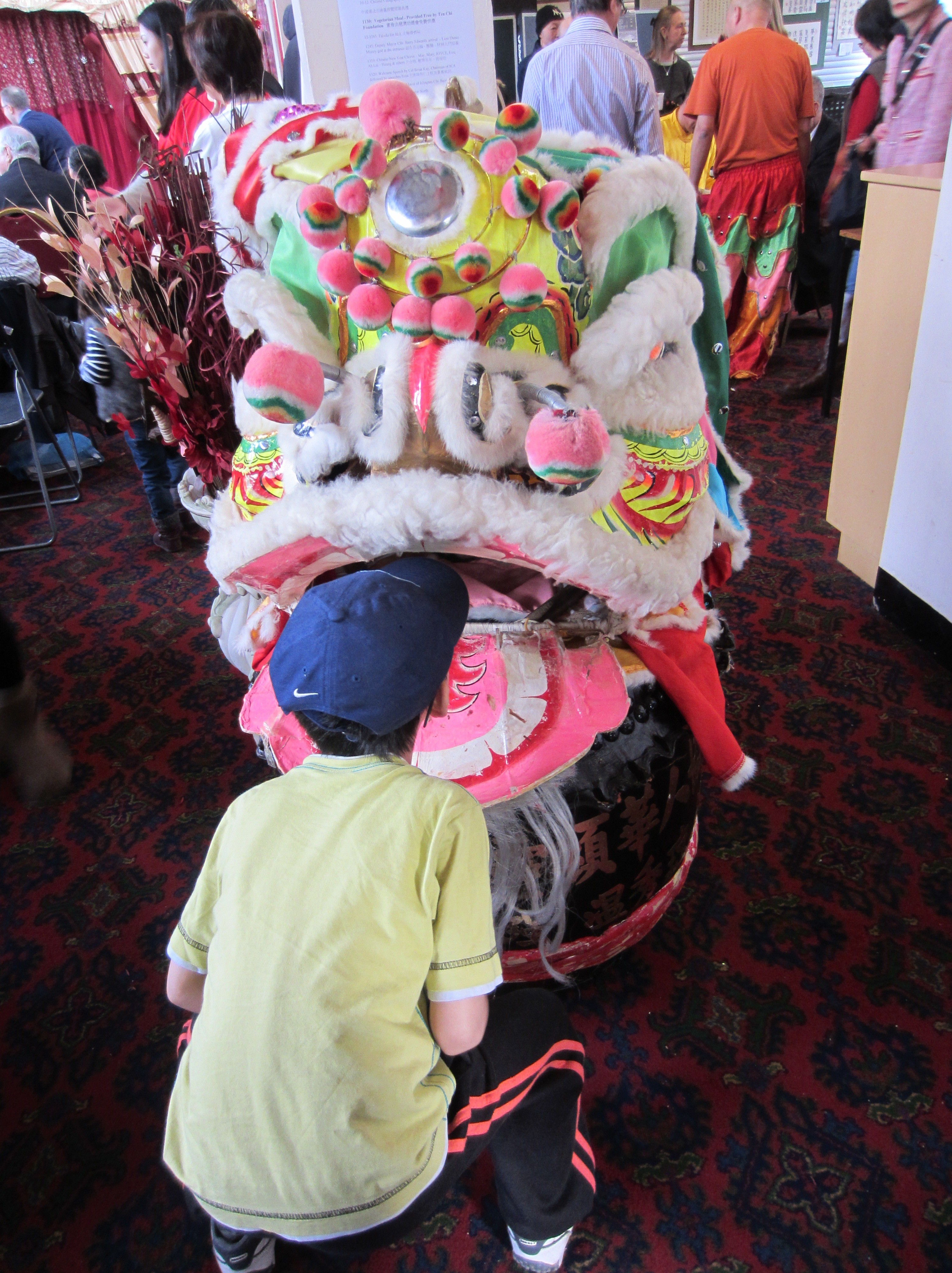
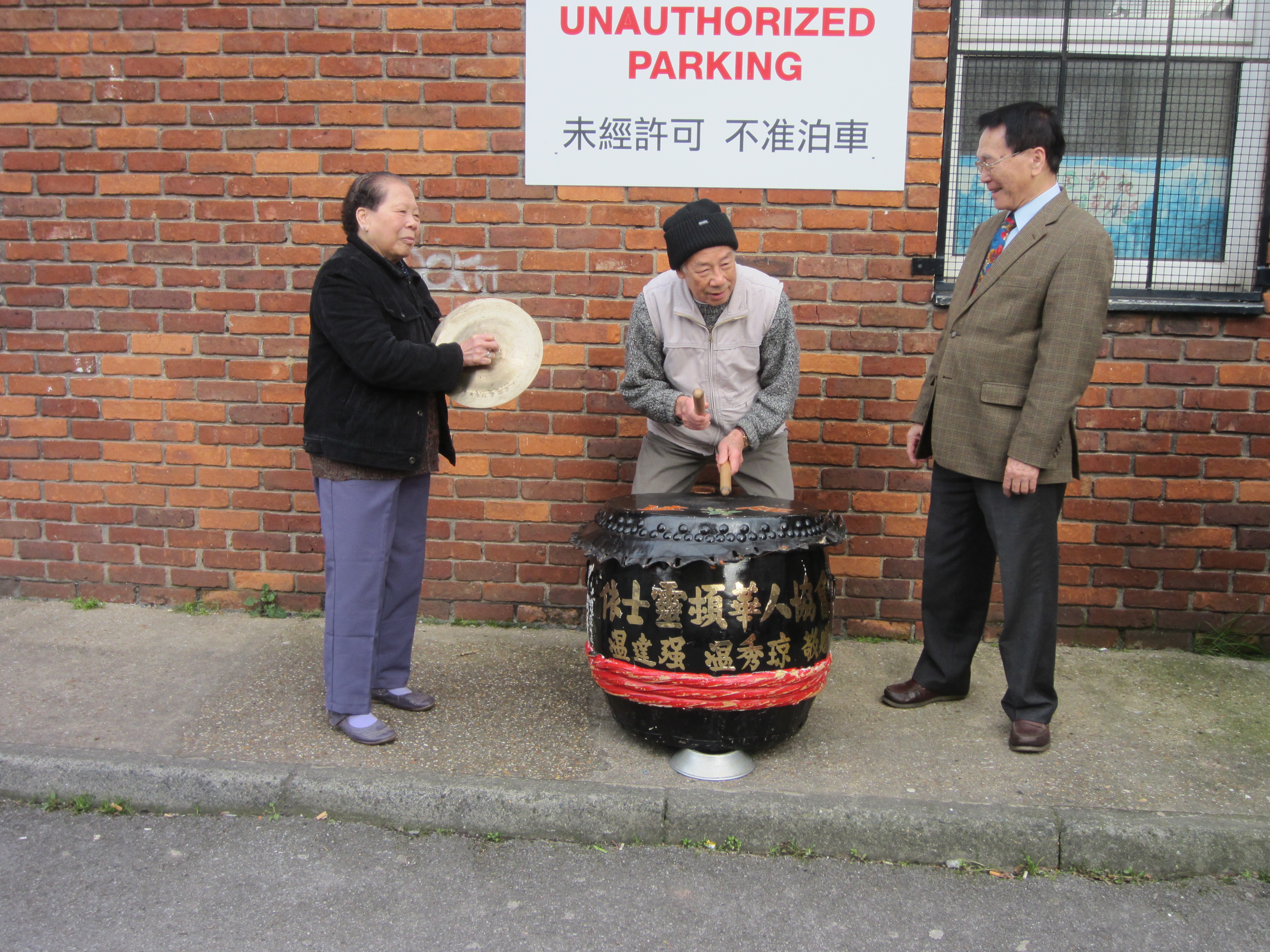
Those worries didn’t last long. We were soon distracted by an insistent beat and the clanging of cymbals. On a pavement outside, a round Chinese drum, its black lacquer gilded with golden characters, had been set up. Lion is approaching. boom-boom-boom The drum was extraordinarily loud, inducing a shiver in the pit of my stomach – a frisson I always feel when I know that the epic Lion Dance will follow. Neighbours peeked out of their windows as the Lion approached, bearing its multi-coloured head. This was a friendly beast, so friendly that at least one little boy was tempted to peer solemnly into its ravenous mouth. The Lion wagged cheeky pink tongue and tail in every corner, which I hope was enough to chase away any evil spirits lurking.

What's in there

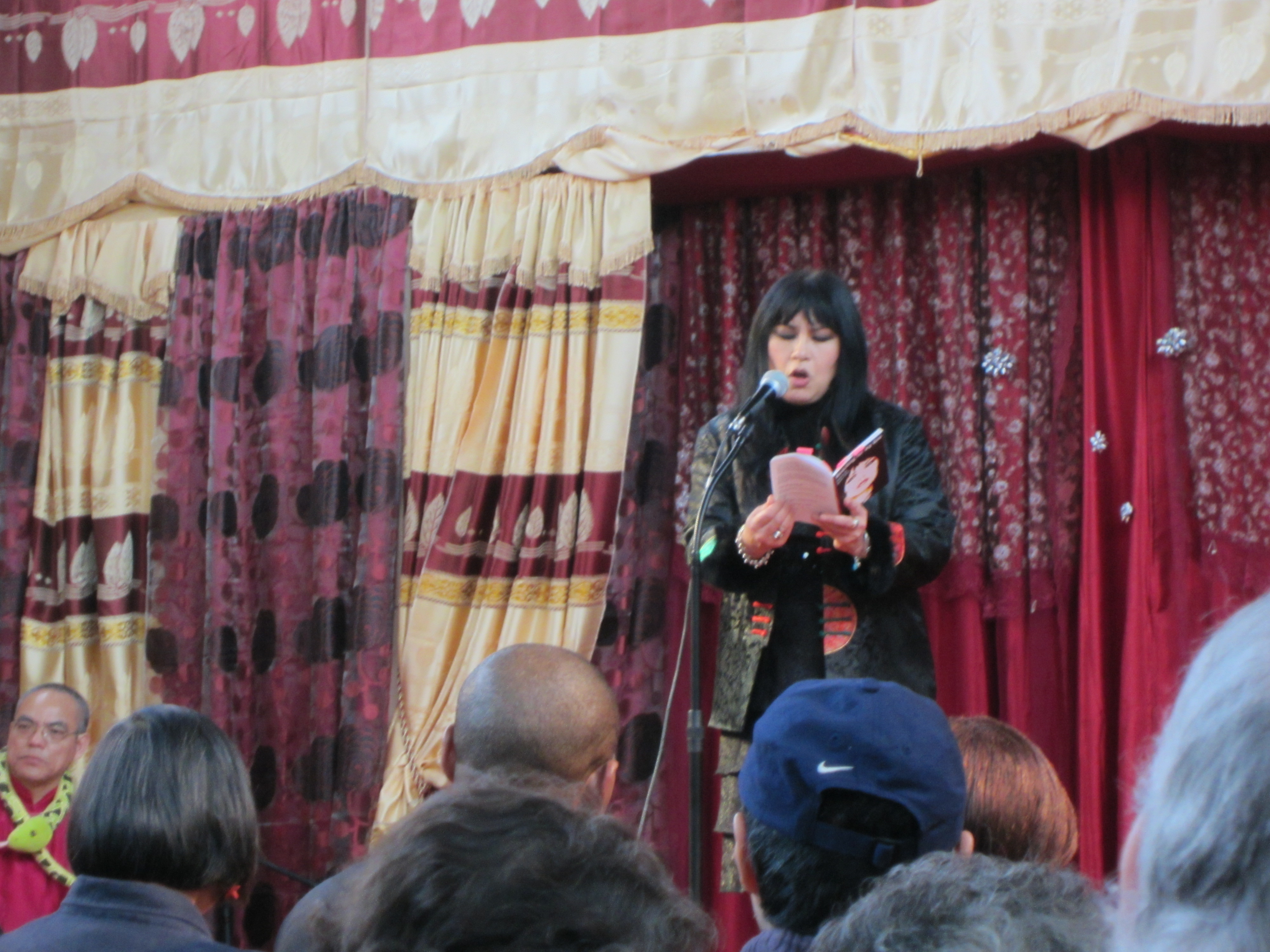
By the time I returned inside, the upper floor of the ICA had been transformed. In its place was a concert hall decked with rows of chairs. From the stage at the front came the dulcet tones of a Chinese flute, so lulling that even the children stopped squirming. When Anna Chen, poet and activist, took to the stage, she invigorated the crowd by half-reading and most astonishingly, half-singing, her poignant poems. The lyrical Anna May Wong must die was especially powerful – ‘a personal journey through the life and crimes of Hollywood’s first Chinese screen legend’, it says on Anna’s website. (I hope everyone reading this will have the opportunity to watch Anna perform). I could see that people listened, but you had to be able to hold their attention.Anna Chen reads her poetry

All too soon, it was my turn. I had been told I would go onstage after the fan dance. I waited in the wings, tense because I knew it would be the first novel reading at the ICA, afraid also that my story might not be regarded as ‘Chinese enough’ for a community event of this sort.

Indeed, the family in my novel is mixed, the woman who leads it being a Nyonya – part of the Chinese diaspora in South East Asia which dates back centuries. Many people today have never heard of the Nyonyas and Babas, even in Malaysia. This is a great shame, because the Nyonyas and Babas successfully created a unique fusion of Chinese and Malay culture long before globalisation existed. In their way of life, they have something to teach us, especially in present-day Malaysia where race drives your rights, or the lack of them (see blog-post The Malaysia We’ve Lost).

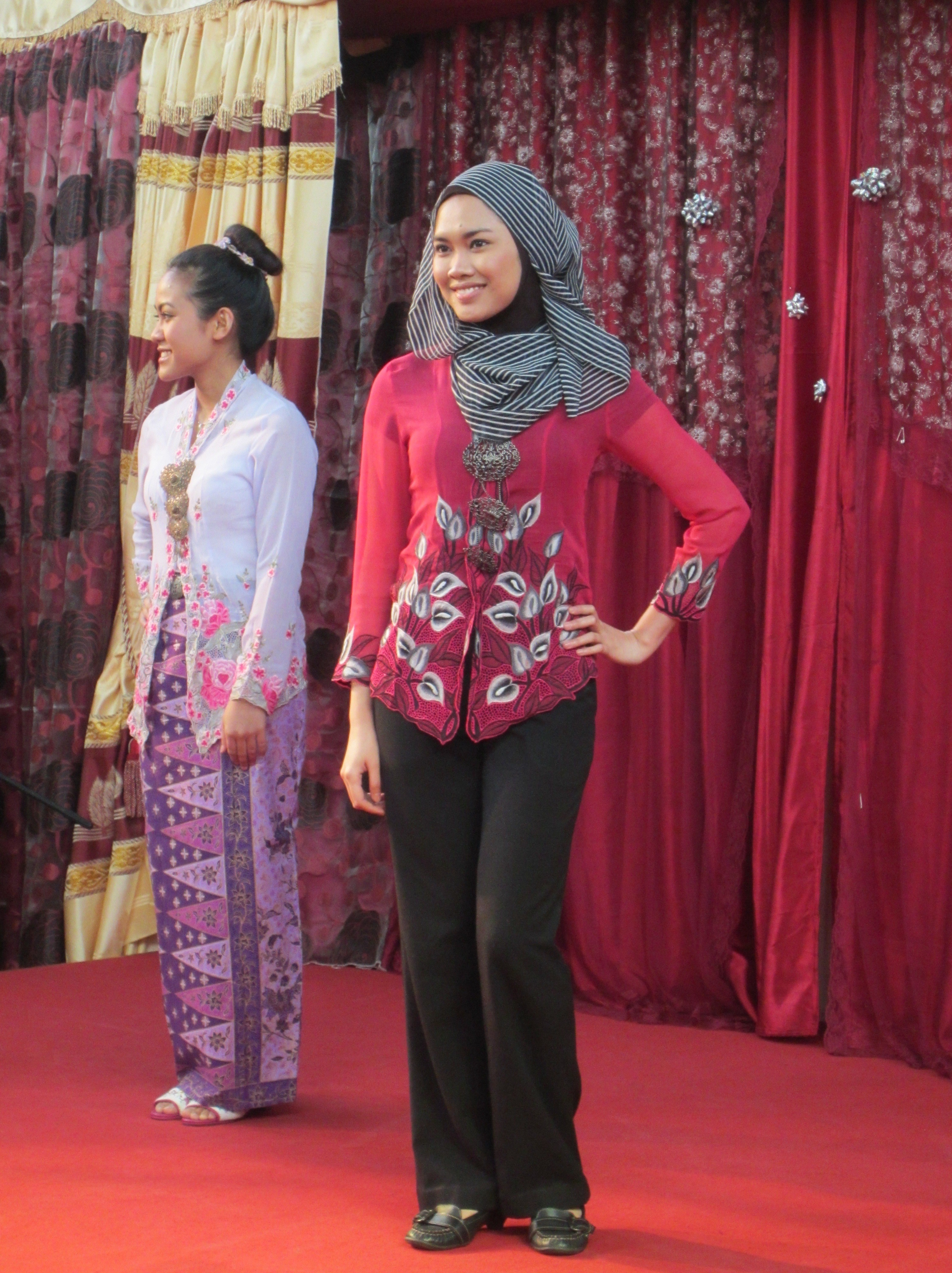
The first passage I read told the ancestral story of the Nyonyas and Babas. Selina introduces the Nyonya themeTo make my reading come alive, I had watched videos of actors and politicians speaking. I also enlisted the help of two Malaysian students, Wahidah and Aufa Dahlia, who gallantly came on stage modelling Nyonya costumes. Wahidah, her hair tied up in the famous Nyonya chignon, looked resplendent in a tailored vintage sarong kebaya.Demonstrating sarong kebaya Her blouse and sarong came from Aufa’s private collection, while her feet were adorned by a pair of hand-made Nyonya beaded slippers which had been purchased from a shop, Colour Beads, in Malacca. This beautiful town is arguably Malaysia’s most historic, and a large Nyonya-Baba community once lived there.

Wahidah was subsequently joined on stage by Aufa Dahlia, who showed off her modern Nyonya attire with great aplomb. The audience sat enraptured, so graceful were the kebaya ladies. Later, many went up to Aufa’s table, where she had placed a sample of the kebaya blouses she sells on her website as a hobby. If the kebaya ladies and I were to form an act, we would surely be hits on a reading circuit!

Modern NyonyaOther artistes followed, including the kung fu master whose rhythmic movements mesmerised everyone. Look at the picture below and you will see why he was a tough act to follow, especially by a writer reading her second passage late in the day. Kung-Fu masterFortunately, I was aided by the dramatic second scene I had chosen to read and by the prop I brought along: the Nyonya kueh (cakes) which feature in my novel. I had only two varieties with me – both from the Malaysia Hall Canteen in Bayswater – but they disappeared in seconds after being shared out!

Afterwards, people came up to say how much they had enjoyed my reading. One woman thanked me for opening her eyes to the diversity of the Chinese diaspora, a few even asked where they could buy my book. Alas, I had to say it was not yet published but I gave them my card nonetheless, as it has the address of this blog on the back.

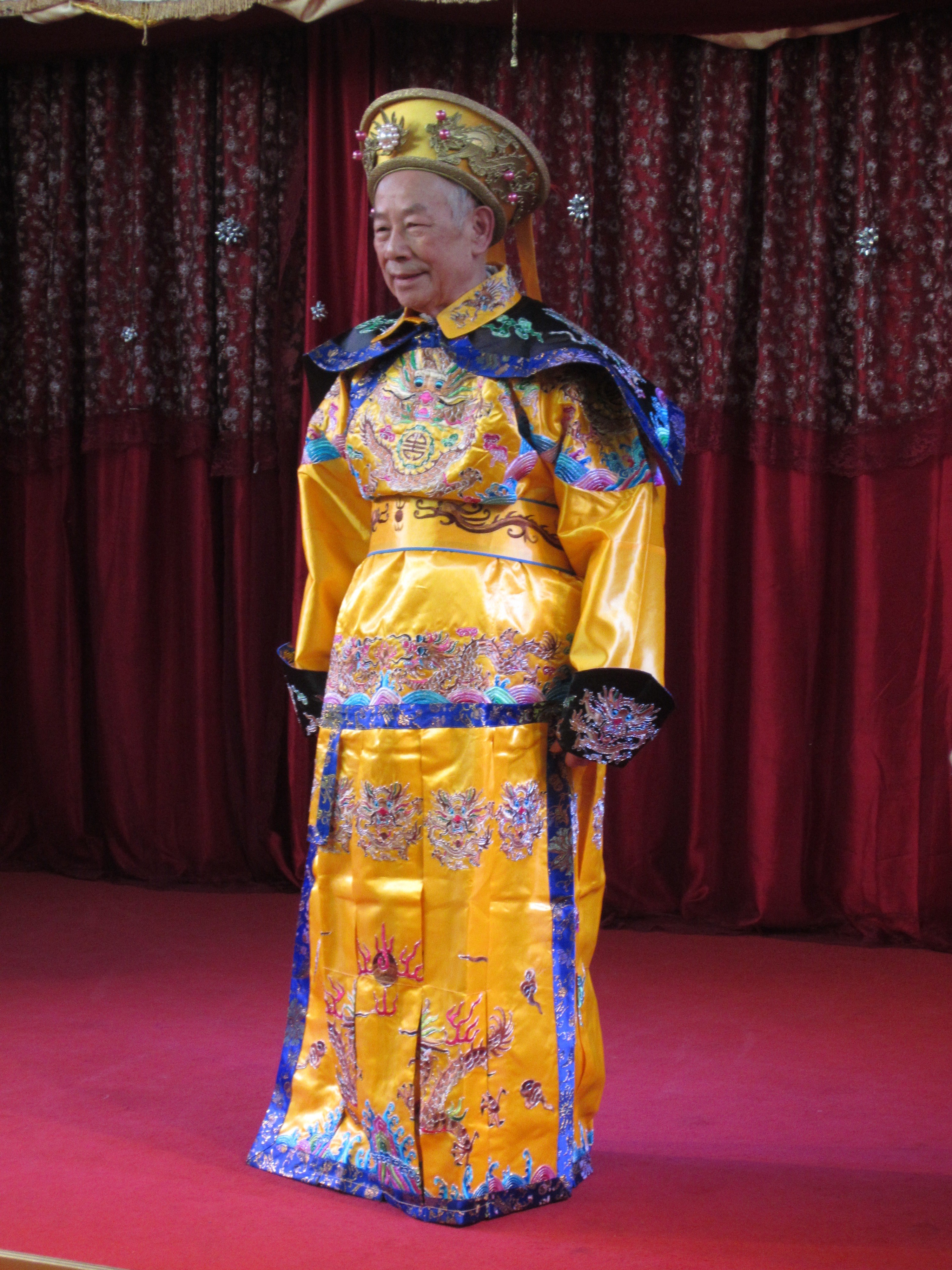
The grand finale of the afternoon was a Ching (Qing) Dynasty costume parade which starred a Mandarin, a Court Official, a Eunuch, the Empress and of course, the Emperor, all in borrowed robes which had never before been worn in the UK. Truly a fitting way with which to end such an uplifting day.

The EmperorAs we headed off, I thought of those who had come before us. It was not just Emperors and Empresses who made history but the coolies leaving in desperate circumstances, and before them, during the Ming Dynasty, the adventurer traders who left to settle elsewhere. These ancestors, all of them, have left their mark in the sands of history. And we their descendants are immensely fortunate, in having such a rich heritage to celebrate.

3 Comments

Filed under Cultural Identity, Identity, Malaysia, Novel, Nyonya

I’ve Finished!

Six days ago, I finished my novel. Yes! It has taken four drafts and almost two years to hone the 150,000 or so words of my historical epic family drama.

Given that I completed the first draft in just twelve months of furious writing, I find it amazing that I then spent another eleven months editing my work, word by precious word. In the early months, when I sat before my personal computer in full narrative flow, I naively wondered why some books took their authors seven to ten years to write. Now I know.

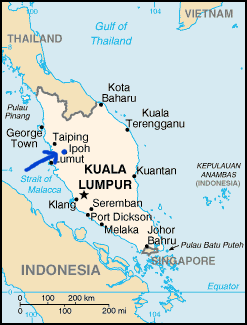
Looking back, I can see that the first draft contained mainly bare bones. It was as if I had to pour the words out onto a page, so that I could tell the story to myself. Many writers say they don’t share their first drafts with anyone else, but perhaps I’m more thick-skinned. Besides, I find I need feedback to get those creative juices flowing. I therefore showed my first draft to my partner, and also to a professional developmental editor. If I had to do it again, I would do exactly the same thing. I was fortunate in having Dr. Nathalie Teitler, formerly a tutor at Spread the Word, among other organisations, as my editor. The drama I’ve written takes place in Ipoh, Malaya (see map), within a complex multicultural setting, and I needed an editor who would be sympathetic to such material. Right from the start, I became used to criticism, to having chunks decimated, even a whole chapter rejected. I write to be read, and I needed such input. ipoh

In that period, I also sent my early draft to two literary consultancies. Both are reputable and advertise themselves as ‘leading’ consultancies, yet they gave opposing feedback: one very encouraging, the other much less so (I had not told either that this was a first draft). The experience confirmed what I had already suspected – that whether your writing is deemed ‘good’ is highly subjective. Much in the writing industry seems a matter of taste.

When I started the second draft, Nathalie worried I would lose momentum. It happens to many, she said. With me, the opposite was true: ideas came quickly and not always in tangible form, often at night in half-dreams from which I awoke, unsure of the words that had been churning in my head. I was in Malaysia at the time. Something about the heat, the food, family and the way people speak there  (Wahh! Like that also can ah?) stirred my imagination. Thanks to a prolific subconscious, large chunks were added to and taken away in the second draft. A major edit, I thought, until I began the third draft.

That was when I really did sharpen every word in every sentence. It is now quite a different book to what I had at the beginning, or even after the second draft. By that, I don’t mean that the underlying story has changed, rather, that I’ve told it using many more motifs and metaphors.

Editing, I was to learn, is an art. An art which I resisted, until I started to enjoy it. Editing is hugely time-consuming, and anyone who has put together a presentation in the corporate world will understand one of its frustrations. Changing a phrase in the third paragraph of the second chapter could impact the flow of what came before, as well as what comes after. Often, you have to re-read a lot more than just the short paragraph you are changing.

Late in the editing process, I discovered a critical tool: reading aloud. I found that if I could not get my tongue around a sentence, it was usually because there was a problem with that sentence. When I re-wrote it in a way that made it easier on the tongue, the prose invariably became clearer. But reading aloud an entire epic drama of 150,000 words twice from start to finish takes a lot of time. It has a cost on family life too, if your partner happens to be your first reader, which is the case with me. Every time I re-wrote a piece, she was asked to read it. This was especially true of the beginning and end, which I re-wrote, re-read and re-wrote many more times than five, in fact, so many times that I fear I may have lost my first reader in the process. I worry she won’t bother to read the published book! Be that as it may, I can finally say I have completed my first novel. Hallelujah!

30 Comments

Filed under Malaysia, Novel, Writing

My First Book Reading

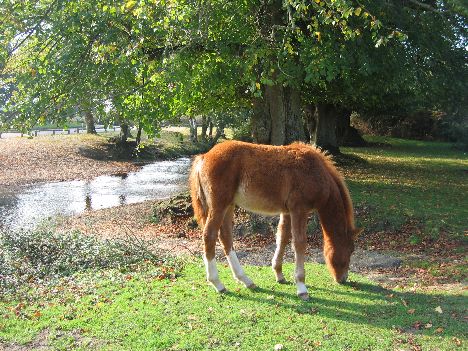
It is a wonderful time to be in the New Forest (the brown blob at the bottom of the map). The New Forest lies in Hampshire, and is now one of England’s national parks. In early October the trees are still green, but the oranges and gold of autumn have crept in.

Ponies meander in open fields; along the streets of Beaulieu village, famous for its National Motor Museum, wild donkeys poke their curious nozzles into the doorways of shops.

It was in this pastoral setting that I gave a book reading on the evening of October 3. I had been invited by Monty’s Book Club, whose members meet once a month in the Montagu Arms, a pub and hotel located in the heart of Beaulieu. The club reads the whole range of literary fiction, from contemporary works through to classics. This book club has existed for three years and is thriving; it even has a waiting list. Membership is restricted to ten at any time, because the club borrows books from the local library and ten was felt to be a manageable number. A member told me the size is just right, as it allows for varied discussion without being intimidating.

I was only the second writer to read to Monty’s, the first being Natasha Solomons. To publicise her debut novel Mr Rosenblum’s List, Ms. Solomons went on a quest to visit as many British book clubs as she could. She duly arrived in Beaulieu. There, she paved the way for others, because her reading was such a success that Monty’s members welcomed me too.

My own invitation came about through personal links. During the six years I spent at SouthamptonUniversity as a theoretical physicist, I often sought refuge in the New Forest. I loved its peace, its trees and the colour of its skies. I still visit, to see a long-standing friend whenever I can. On one such visit in the summer, I heard about Monty’s Book Club, and wondered aloud whether the club would be interested in a reading of my novel.

The club said yes. Like Ms. Solomons’ reading, mine was also to be a special event, held not in the Montagu Arms but in a member’s house. I arrived with some trepidation. I had never given a book reading before and didn’t know what to expect. I knew the atmosphere would be genteel and its members polite, but I didn’t want people to say nice things just because they felt obliged to. If anyone became bored during the half hour or so while I read, it would have been obvious to me – and the rest of the audience.

So I practised, many times. I recorded my voice on a sleek, silver Olympus recording machine my partner had given me as a present. It’s a fabulous gadget: pocket-sized yet powerful. On it, you can hear everything, even the rustle of paper. I listened to my enunciation, making sure there was enough nuance in my voice to keep everyone’s attention. I learnt to pull my stomach muscles in when my voice fell, so that I could better project sound across a room. I imagine that this is what singers have to do.

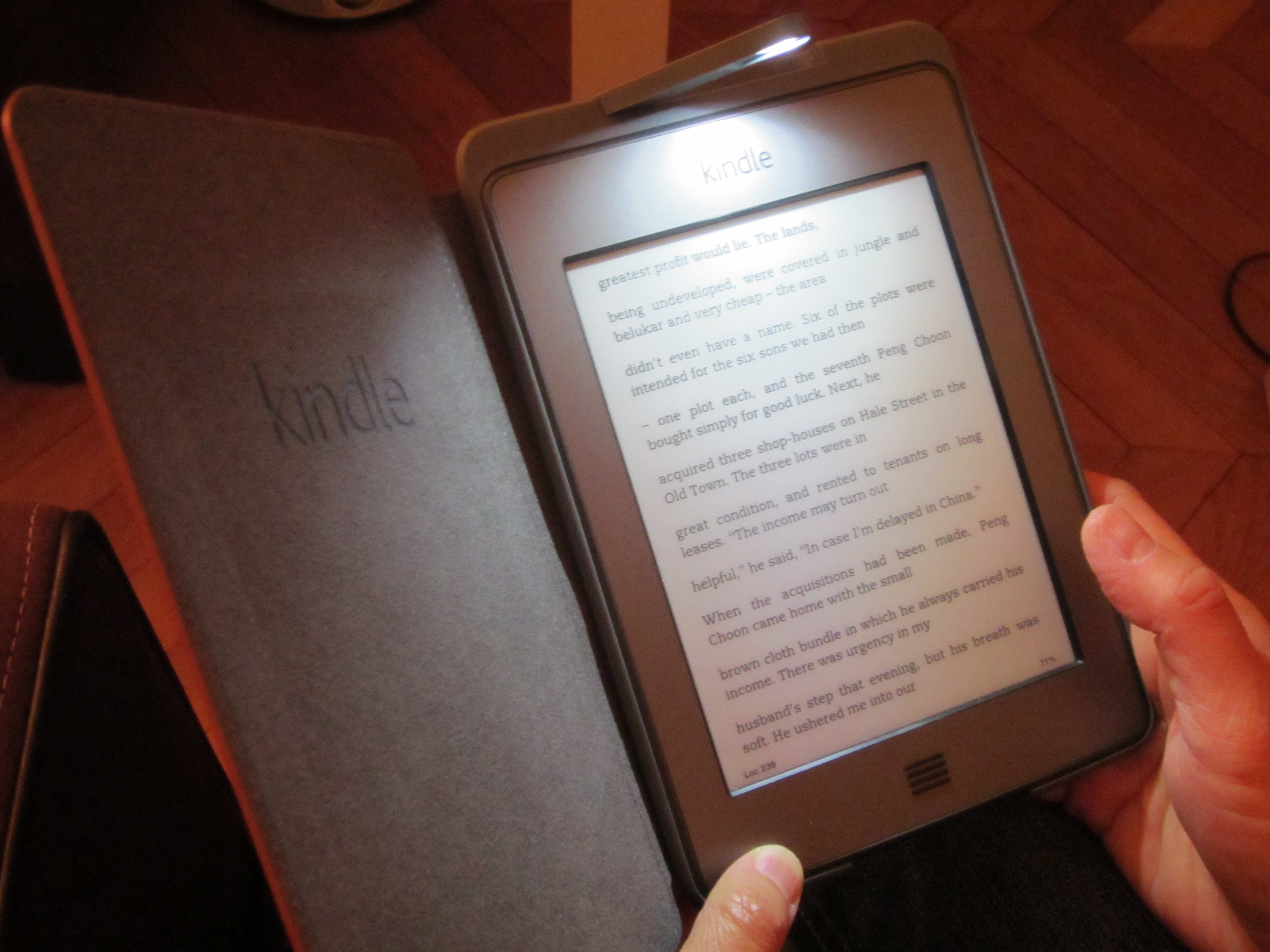
I read from a Kindle reader with a special leather cover that has its own discreet lamp at the top. The light flicks in and out; it can be fully tucked in unless needed, a highly ergonomic design. Much as I love holding a physical book, I also love my Kindle and its cover. Its leather feels wonderful in my hands, and the fact that its light shines directly onto the page is a huge bonus. The Kindle proved incredibly useful during my reading. 

In the end, I read two sections, one short, the second longer. The first was the ancestral story of the Nyonyas, the people from whom my main protagonist, Chye Hoon, is descended. I looked at my audience as I read, watching for any sign of a yawn or of eyes glazing over. None came. I could see that the members of Monty’s Book Club were imagining the scene in their own minds, seeing the character in my story who is herself telling a story.

When I began the second, longer section, the eyes of my audience were still on me. The scene takes place on the island of Penang, which a few in the room had been to. But my Penang is the Penang of 1898, and I invoke a place covered in virgin jungle, where elephants are still a form of transport. In this scene, Chye Hoon is about to get married. It is a huge celebration, because Chye Hoon is an independent-minded girl with a fearsome temper and no one believes she will ever find a suitor. But get married she does, in the colourful Nyonya-Baba tradition of the day which left my modern British audience wide-eyed.

Afterwards, the members of Monty’s asked many questions. We talked about the Nyonyas and Babas, whom none had heard of previously. We talked also of Malaysia, the real Malaysia, not the one touted on Tourism Malaysia billboards. I was impressed that this group – educated women, some with careers, many who stayed at home, some now pursuing post-graduate studies, and all juggling a host of family commitments – remained late into the night to engage in a culture they had never heard of, in a country some had yet to visit. I took it as a good sign that there would be interest from a Western audience in my multi-cultural novel. Its themes are topical today: the ongoing tension between modernity and tradition, and the invisible cost of the cultural assimilation which some of us must face.

In my novel, the characters speak like real-life Malaysians. I mentioned this in a previous blog-post What Does it Cost to Write a Novel?, in which I had said I was unsure about this point of style. A member of Monty’s, a speech therapist, said she loved my dialogue. She especially liked the way I had changed the order of words. She put it very aptly: “Language isn’t just about communication; it also conveys a sense of place.” In a number of novels she had read, the characters had spoken in ordinary English even though the stories were set in foreign lands, and she had felt this sense of place to be missing. Others in the group agreed. I breathed a sigh of relief, because my audience had validated an intuition which I, as a Malaysian writer, have long had.

My grateful thanks to Monty’s Book Club; they made the evening what it was, and also helped clarify an ambiguity in my own mind. A few members asked when my novel would be published. Some worried it might not. But it will – because I write to be read, not so that my script remains as bits on a motherboard. When and in what form my novel will be published, I cannot say. But I will work to get it there, even if it means having to start a publishing company.

12 Comments

Filed under Malaysia, Novel, Nyonya

An Open Letter to my Malay Friends and Anyone Who Cares Where Malaysia is Going

August 31 is Malaysia’s Independence (Merdeka) Day. On this day fifty five years ago, the Union Jack was lowered for the last time and a new country was born.

Malaysia (then called Malaya). 

She was to be a powerful narrative for multiculturalism. A place where many races – Malay, Chinese, Indian, Eurasian, Orang Asli (native indigenous people) – would live together, work together, as one, to move the country beyond the shadow of colonisation.

Malaysia remains a powerful idea. It’s one I believe in. But it has gone badly wrong. That’s why today, I’m writing this open letter to my Malay family and friends. I believe Malaysia is fast reaching a crossroad; where it goes next will be determined by you, my dear Malay friends. And where Malaysia goes is important to the world – because it remains one of the more tolerant Muslim countries.

First though, I want to say a big thank you. On this Merdeka day, I want to thank you, my Malay family and friends, and all fellow-Malaysians of Malay descent, for your historic generosity. Your ancestors welcomed mine when they arrived. You have shared the land with us, and this in turn, gave us opportunities we wouldn’t have had on mainland China. You provided us safe refuge from the turmoil of China. When I learn what happened there in the past century, I am so grateful my ancestors left. And that they found shelter in the beautiful land now called Malaysia.

My Malay friends, your own ancestors came from other places. They knew what it was like to be strangers in a new country. They treated my ancestors with that gracious hospitality which I myself have experienced countless times. All this I acknowledge, and thank you for.

But now I need to move on to something else: why I left Malaysia, and why I won’t be returning any time soon.

You may already know that 2 out of 10 Malaysian graduates live outside Malaysia. This is an astonishing fact for a middle-income country like Malaysia. It was revealed in a detailed study on Malaysia’s brain drain, carried out by the World Bank.

My Malay family and friends, do you not care about this exodus of talent? This isn’t just an abstract number: in our family, half those of my generation live abroad. We are the graduates this World Bank report identifies. We compete happily in the world economy and have no need to return.

Perhaps, my Malay friends, you think the brain drain irrelevant, since most of the people who have left are of Chinese and Indian descent? Certainly, this is what many Malays think, as Nurul Izzah Anwar, daughter of Anwar Ibrahim, has alluded to. (If you haven’t heard her speak, I recommend you watch this youtube clip. The opening is in Malay; the rest in English). 

“For me,” she says, “one Malaysian regardless of race, who has left the country…is a loss to us. They should be here celebrating, to improve the economy. I detest many people trying to singularly find out whether they are Malays, Chinese or Indians.”

My sentiments entirely. This fixation on race, race, race, in Malaysia is strangling the country. Yes, 88% of the one million Malaysians estimated to be living abroad are of Chinese and Indian descent. So what? My Malay friends, I ask you: does our race matter more than the fact that we have taken our talents elsewhere?

Yet, should I expect anything else? How could any Malaysian not be fixated on race, when you, my Malay family and friends, are accorded ‘special’ rights solely because of your race and religion?

Imagine if the United States had given ‘special’ privileges to the Pilgrim Fathers and Mothers and their descendants. Special rights to land, schools, gold mines and everything else – all because they sailed first; yes, just imagine! This is exactly what your special rights equate to. If the US had adopted such a policy, do you think it would have turned into a magnet for talent and skills?

Tell anyone about a Malaysian university reserved for people with ‘special’ privileges based on race, and you will see the reaction. What? People stare in disbelief. You must be kidding!

I’m not. And there have been demonstrations against opening the institute up to other Malaysians. Yet, Malaysians are so used to these oddities that we don’t bat an eyelid. We no longer notice the strange ideas plaguing our country.

Your ‘special’ rights, my Malay family and friends, alienate me. They make me feel unwelcome, unwanted and second-class. They are why I left. They are also why I won’t be back. Rights are a zero-sum game: for you to have more rights, others must necessarily have fewer. TalentCorp (the agency set up to attract Malaysians back) completely misses the point.

And when I see the culture of entitlement your ‘special’ privileges have led to, and the increasingly racist rhetoric this culture generates, I fear for Malaysia. Outrageous remarks are now commonplace, as former US ambassador John R. Malott outlined in his Feb 8 2011 op-ed in the Wall Street Journal.

Malaysia has once again been called Tanah Melayu (Malay Land). Malay Land was given airtime by none other than Mahathir Mohamed, former Prime Minister and rabble-rouser extraordinaire, who is himself from a family with Indian immigrants. Malay Land is more than just a name. His is a supremacist concept: a land for Malays, where Malays will be Lords, everyone else their subjects.

Some people say Mahathir no longer matters, but actually he does. I feel less welcome now in Malaysia than at any time in the past. The attitudes of Malay Land are creeping in, and Malay Land is completely the opposite of Malaysia. Malay Land excludes, while Malaysia embraces and includes – a country for all races.

My Malay family and friends, which is it you want: Malay Land, or Malaysia? You cannot have both; you must choose.

On this Merdeka Day, I urge you to think about that choice. Because you, my dear Malay friends, are the only people who can truly change the direction Malaysia takes. Know that we, your fellow-Malaysians who have voted with our feet, are rooting for Malaysia. We are no traitors. 68% of the Malaysians abroad who were surveyed by the World Bank expressed a strong sense of patriotism/attachment to Malaysia. I am among this 68%. I may have been away for thirty three years, but Malaysia continues to be in my dreams. I left with regret, and I stay away with sadness. I hope Malaysia will prevail. Assalamualaikum.

The above blog-post was published in its entirety, but without video or links, on Malaysia Kini on August 31 2012 (http://www.malaysiakini.com/letters/207623).

33 Comments

Filed under Cultural Identity, Identity, Malaysia

Tan Twan Eng, the Garden of Evening Mists and Memories of War

I’m always on the lookout for writers and artists from Malaysia. I get a particular thrill when a piece of literary or artistic work reflects Malaysians as we are, in the places we know and love. It is rare to come across such work outside Malaysia. So when it happens, and the work then goes on to achieve international recognition, I’m doubly excited!

This is what has happened with Malaysia-born Tan Twan Eng. (Surname: Tan, name: Twan Eng. See my blog-post What’s in a Chinese Name?). His two novels have both been long-listed for the prestigious Man Booker Prize – a remarkable feat. I first heard of him in 2007 when his début novel The Gift of Rain was published in the UK. A former banking colleague had recommended I read it. “It’s beautiful,” he told me. He was right. The Gift of Rain is set on the magical island of Penang, home of sandy beaches and swaying palms. The story in it unfolds in lyrical prose as light as stardust.

Yet, Tan Twan Eng is not especially known in Malaysia. This is a shame – because his work ripples with themes Malaysians would find interesting.

To begin with, both novels are about the War and its aftermath. For Malaysians, there is but one War: the Second World War – when Malaya was occupied by Japanese forces. This occurred between 1941 and 1945. Roughly seventy years may have passed, but we continue to be affected by the events which took place then. They changed Malaya irrevocably, in ways we are only beginning to explore and understand.

I know I was obsessed with stories from the War era as a child. Whenever my now-dead maternal Grandmother visited, I would beg her to tell me what the War was like. She would sit, as calm as a lake on a still night, and in her deep voice, would tell me things I simply could not imagine. Soldiers rapping on doors and windows, looking for girls and women; men being rounded up, forced to stand in 30+ degree Celsius heat with no water; the screams that could be heard from one of the hospitals in Ipoh, where the Japanese had set up a torture chamber; heads on spikes, on full display at the front gates of Ipoh’s Central Market as a warning to the headstrong.

I thought I knew much about the War. Yet, both The Gift of Rain and Garden of Evening Mists, Tan Twan Eng’s latest novel, taught me new things.

For example, I grew up believing that the British Colonial administration had done its very best to defend our country. Not so, according to The Gift of Rain, and my own research confirmed this. Much has been made of the Malayan Campaign. But if we cut through it all, here is the bald fact: Britain largely abandoned us to the Japanese. Japanese forces attacked the north-eastern coast of Malaya first, before swiftly marching across the country: westwards and southwards, over mountains and across jungle our Colonial rulers had said was impenetrable. Yes there were battles – mainly in support of retreat – unlike in Europe, where the British army fought for every inch of ground, to the death. In Malaya, the Colonial troops retreated…and retreated…until they reached the island of Singapore and there was nowhere else to go. At that point, some hopped onto ships bound for Australia, following their women and children. Those who didn’t leave on time were captured when Singapore fell.

I was sorely disappointed by what I learnt. It still rankles today. The only thing I can do with my feelings is to write about what happened.

I imagine Tan Twan Eng must have been similarly affected, though he has worked wonders to weave history into his stories easily. His writing doesn’t feel dense, nor is there any rancour. Amazingly, each novel incorporates a Japanese central character. In Garden of Evening Mists, this happens to be the Emperor’s gardener; in The Gift of Rain, it is an aikido master. Tan himself has first-dan ranking in aikido, and has obviously studied Japanese thinking. He manages to convey some of its Zen-like mystery and beauty through slow, deliberately measured prose, so that even the positioning of stones within a garden becomes pure poetry.

Garden of Evening Mists tells the story of a young Malaysian-Chinese woman, Yun Ling, who goes on to become a lawyer, but who cannot forget the War. After graduating from Cambridge, she takes leave to learn the art of creating a Japanese garden from a man who was the Emperor’s gardener. This fictional garden is located high up in the Malaysian hills, in Cameron Highlands, a dreamy place once shrouded in jungle and mist. It was developed because it reminded British Colonialists of their home. Yun Ling hopes the creation of a garden will be cathartic; instead, it adds layers of intrigue and pain she only comprehends years later. 

Japanese themes also echo in The Gift of Rain. A Eurasian boy, Philip (Note: By Eurasian, I don’t mean someone from that piece of land known as Eurasia, but a person with one European parent and one Asian parent), who lives in Penang, is befriended by a Japanese man, Endo, before the War. Philip is taught aikido by Endo. Perhaps I read too much into it, but what develops within Philip is a depth of feeling which struck me as homo-erotic. (Though I stress this isn’t a ‘gay’ novel.) Philip learns not only aikido, but also the Japanese language. Then, the Japanese arrive, en masse. You will have to read the book to find out what happens to him, his family and Penang.

Incidentally, there is an explicitly gay character in Garden of Evening Mists. I mention this because it shows me that Tan Twan Eng isn’t afraid of tackling a subject we in Asia prefer to avoid.

Like a good story-teller, Tan Twan Eng folds his own experiences seamlessly into his writing. Having lived in Cape Town for the past few years, he inserted an Afrikaner into his latest book. There are therefore plenty of lekker braais (delicious barbecues) alongside descriptions of Cape Dutch houses and flora. And these are all made to fit into Cameron Highlands!

Reading Tan Twan Eng has inevitably made me reflect on my own work. My current novel deals with an equally dramatic period for Malaya – the years after colonisation but before the War. It was a time of great change: cars and airplanes came to Malaya then, Malayans started to learn English and many families became westernised. There was also a Japanese community in Malaya, whom we later learnt were spies. Many were photographers; one of them features in my novel towards the end, just before the eve of the Japanese invasion, when the matriarch in my story dies.

I had always intended my novel to be the first in a trilogy, with the second in the series focusing on the impact of the War years on a particular family in Ipoh. Reading Garden of Evening Mists has made me realise how much is left to explore…What an incredible life this is.

2 Comments

Filed under Malaysia, Novel, Research, Writing

Lost Cells 2: Chinaman, Englishman and the Malaysian-Chinese Divide

“Chinaman!”

I remember the first time I heard the word. It was more a cry really, a shout which came back in a dream, stirring the depths of my memory.

I wonder what the word conjures up for you. Does it evoke an image? I would love to know. Please click below to answer a simple question.

Thank you for sharing your experience.

—————

It was the tone in which ‘Chinaman’ was said which must have caught my attention, because I began to ask questions. The adults around me squirmed, and then became evasive as they pretended that ‘Chinaman’ was an innocuous word. They told me it referred to a man from China, in the same way that ‘Englishman’ referred to a man from England.

But they were lying.

‘Chinaman’ had a ring to it; the word shook the dust, as if phlegm were being expelled. No one said ‘Englishman’ in the same way, or ‘Frenchman’, or any other word which contained the name of a country.

As I grew up, I learnt its many connotations.

Uncouth.

Lower class.

Untrustworthy.

Dirty.

Greedy.

Rude.

Slitty-eyed ugly.

No wonder the adults had been ambiguous. There is nothing attractive in the descriptions above, and they must have been embarrassed at having to explain themselves. Every one of them was of Chinese ethnicity, and I wonder what they could have been thinking. If you were Chinese – a Chinaman or a Chinawoman – what did you have to tell yourself in order to be able to spit out ‘Chinaman’, a word loaded with implications, so easily? How did you deal with the confusion which must have lurked somewhere inside your head and your heart?

—————

As I held the contradictions inside, I veered between shame and outsized pride. There were moments when I shuddered, disgusted at my association with a race of coarse, yellow-skinned peasants who spat on the street and spiced each meal with slurping and burping. How could I have come from the same stock? There was no escaping genetics, but I sometimes pretended I could. I had to make these ‘Chinamen’ separate from me.

—————

Before I came into the world, my grandfather and granduncles did the same. They were born in Malaya in the early 1900s, a time when China was fast declining while Britain’s star remained in the ascent. My great-grandfather Chin Choon Sam was a first-generation Chinese immigrant who married a Nyonya woman, my legendarily fierce great-grandmother. When my great-grandfather settled in Ipoh (see map and blog-post My Ipoh), he raised a second family, as was common with Chinese immigrants of the time who had left families behind in China. We know little about his first family other than that he had a China-born son, who often visited his half-siblings in Malaya.

His two families were raised very differently, however. With the onslaught of British colonisation, his Malayan sons were educated in English – at the Anglo-Chinese School in Ipoh. This is one of Malaysia’s most famous schools and among the first to be founded by missionaries (as detailed in my blog-post Smart Girls don’t find Husbands?!). My grandfather and granduncles learnt to speak and write fluently in English; they wore Western clothes, adopted healthy doses of British manners, and converted to Christianity. In contrast, their China-born half-brother, having been schooled in China, spoke only Chinese and was more comfortable with traditional Chinese customs.

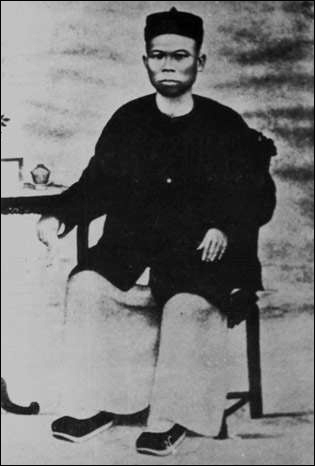
It was perhaps inevitable that my grandfather and granduncles thought themselves superior to this ‘Chinaman’ among them. We have no photographs of my China-born granduncle; whenever I try to imagine what he looked like, all I can see is a man with a brown face, clad in a Mandarin suit, his hair covered by a cloth cap or a hard conical hat. This, I realise, is simply an image of a Chinaman I have picked up somewhere along the way, a picture not unlike that well-known photograph of Yap Ah Loy, the founder of Kuala Lumpur (see map), Malaysia’s capital city.

I wonder what my Westernised grandfather and granduncles must have thought as they sat with the supposedly flesh-and-blood intruder inside their home. Perhaps choice words came into their minds?

Uncouth.          Lower class.   Untrustworthy.

My aunt who remembers the visitor from China confirmed the disdain with which my China-born granduncle was treated. “Like a second-class citizen!”

The poor man eventually decided his prospects would be better in his native country and returned there for good. I only hope life wasn’t too harsh for him after the Communists came to power.

—————

My family’s story was not atypical. In the decades when Malaysians looked up to the West and regarded English as superior, Malaysians of Chinese descent who came from English-speaking homes looked down on their Chinese-speaking compatriots. (Of course, all Malaysian-Chinese speak both English and Chinese to some extent; what I’m referring to is our primary preference, our modus operandi: the language in which we feel the most comfortable and which shapes how we behave in this world.)

For a long time, we English-speaking Malaysian-Chinese walked with a swagger. Our compatriots felt our condescension, as I was reminded by a Malaysian-Chinese friend from a Chinese-speaking background. She herself attended a Chinese language primary school before continuing to one of the former mission schools for her secondary education.

There, she met Malaysian-Chinese students from English-speaking homes. It was then that she felt the subtle divide which separated her from her English-speaking peers. Nothing was ever said and no one was openly rude, but she knew she was perceived as a lesser person: less wealthy, more ulu (market Malay for backward), not as well-dressed. In the canteen, social segregation took place; English and Chinese speakers usually sat in separate groups. Segregation continued inside the classroom, because in Malaysia, students are streamed according to ability and in general, English-speaking students achieved better examination results.

For my friend, what she felt palpably from one day to another drove her. She wanted to prove to her English-speaking classmates that she was their equal. She has succeeded admirably in this goal; after university in Australia, she worked for a multinational company and now lives a global lifestyle. Years later when she recounted her story, I could still hear the anguish in her voice. My friend’s success has come at a price though: she has now forgotten her Mandarin.

—————

This is largely in the past. With the rise of China, social perceptions have changed. Malaysians no longer look to the West in the same way, and Malaysian-Chinese now prefer their children to be educated in Chinese (for political reasons which I will not discuss here).

In this brave new world, even the word ‘Chinaman’ has lost some of its sting. But a shifting state of affairs always brings its own challenges. A recent review in the UK’s Guardian paper  brought home to me what some of these may be. The reviews was of the much-acclaimed novel Chinaman which is about, of all things, cricket.

Here’s what it said. “A Chinaman in cricket is a particular delivery, a slower ball designed to fool the batsman into thinking it will bounce in the opposite direction to the one it does. It also, in Sri Lankan argot, is a term indicating gullibility.”

Guile and gullibility, juxtaposed effortlessly over one another. This tells me that there are people – perhaps many – who fear and loathe the Chinese (us Chinese?) at the same time. (I rewrote that last sentence repeatedly and still couldn’t decide which phrase to use. Who do I stand with here? Do people regard me in the same way as they do the mainland Chinese? Do they fear us too but would never say so openly?) Their fear and loathing may well increase as China continues to ascend, as it surely will. And while this happens, we overseas Chinese will have to continually reassess our relationship with the land our ancestors once graced, as well as with each other, whether or not we wish to.

5 Comments

Filed under Cultural Identity, Identity, Malaysia

Smart Girls don’t find Husbands?!

The first day I went to school, a Methodist kindergarten, I cried. My mother stood outside watching for a few hours, but I knew she would leave at some point and I dreaded the moment. Nonetheless, when the teacher asked whether any of us knew the song ‘Ten Little Indian Boys,’ I put up my hand. Drying tears, I opened my mouth to sing.

“One little two little three little Indians, four little five little six…”

I became so carried away that when I finished, I repeated the song in reverse, but the teacher told me I had done enough.

That was how my educational adventure began – with a humble rendition of a children’s song. I was not to know that this karaoke debut, full of fear and trembling, would one day lead me to the spires of Oxford University.

—————

While growing up, I was fortunate to have an enlightened mother who emphasised the value of education. The girls in my novel aren’t so lucky. They live in an era when education for girls is deemed unimportant or ignored altogether. Even my feisty Nyonya matriarch struggles with sending her daughters to school. She fears that education would make them too clever to be appreciated by men.  Below is an excerpt:

COPYRIGHT SIAK CHIN YOKE 2012 (from Spirit of Kueh, my unpublished novel)

I wanted to send them to school but at the same time, was concerned not to damage their ability to find husbands, instinctively knowing that men didn’t like wives who were cleverer than they. Even my beloved Peng Choon, wonderful husband that he was, liked to think of himself as being the smarter of us two, which for the sake of peace, I of course allowed. He would make comments, “Ai-yahh! That is rubbish-lah! You talk just like a woman!” in a particular tone, as if talking like a woman were such a terrible affliction.

COPYRIGHT SIAK CHIN YOKE 2012

Attitudes may not have changed as much as we like to think. Even while I was at school, one or two of the older girls warned me that it would be hard to find a man prepared to ‘put up’ with my brains. Therefore, they suggested I play down my intelligence, just a little. How many girls have been told the same thing, I wonder? To dumb ourselves down for the sake of boys?

—————

The matriarch in my novel eventually sends her daughters to the Anglo Chinese Girls’ School in Ipoh, where they thrive. The school, now called the Methodist Girls’ School (see photograph), happens to be my alma mater. It is also the school which my mother and her mother before her attended.

I have fond memories of the place. I remember our old wooden desks, always badly scratched, with doodles all over, sometimes with the marks of penknives etched into them. We had a desk each, and a wooden chair on which we sat for five hours and forty minutes every day, facing a succession of teachers who would come in to teach us different subjects.

Presumably to ensure that we girls would become good homemakers, we were forced to take Domestic Science. It was a subject I loathed. We learnt sewing, the different types of stitches, cooking and I can’t remember what else. Because Domestic Science didn’t have to count towards my end-of-term mark, I would do as little as I could get away with. Once, I actually failed the subject. That proved too shameful; the next term, I made sure I scraped through. Still, I learnt nothing, not even how to sew a button. (If I need a button sewn now, I take the garment to a tailor.)

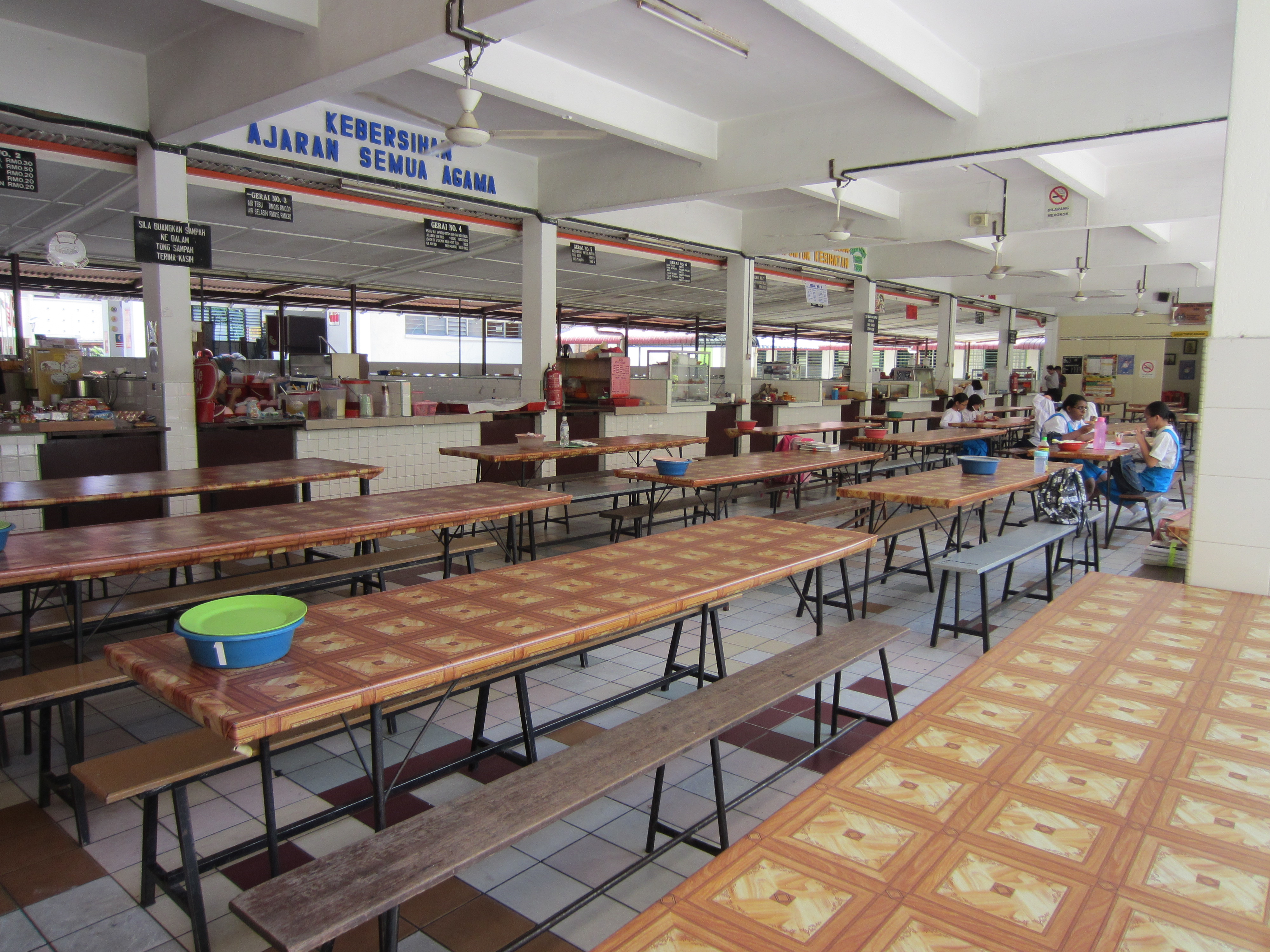
My best memory is the canteen. It served food which, living in England today, I would kill for. Fried noodles, rice dishes, steaming laksa, juicy tropical fruit. During a twenty-minute break, we would devour our food while sitting on benches in a large open-air area, under the cool of ceiling fans (see photograph).   

Our facilities would have struck many in the West as ‘basic’ for a leading school. Yet, we had everything we needed: laboratories, a library, a single set of courts for netball or badminton, an open-air performance hall, and a playing field where we had to do timed runs of six hundred metres in the heat once a term.

Whatever we may have lacked, we more than made up for in attitude and spirit. All of us wanted to do well. Amongst my classmates, it was assumed we would go to university and graduate with a degree.

When I arrived at a private school in England, the opposite was true: facilities were better, but ambition and desire to learn were in scarce evidence. To be honest, I was stunned. My new classmates thought they did well if they passed O-levels in five or six subjects, whereas the norm in Malaysia at the time was nine or ten subjects. And it didn’t occur to my English peers that A-grades were there for a reason: to be attained.

It was only after reaching British shores that I appreciated what Malaysian education had given me. I discovered I had a solid base from which to build, so solid that the transition to England proved seamless, the lessons easy.

I cannot thank my Malaysian teachers enough for all that they taught me. When I say that, I’m not referring to what they explained from our textbooks. Rather, I mean the values they carried within, which seeped into the air to mould us into the people we eventually became. I’m grateful also to my former classmates, for the unique spirit they helped us engender. Unconstrained by expectations of who we would one day be, we accepted each other as we were then: pimply adolescents still unsure of ourselves, burning with hope for the future. We competed hard, but we also played hard. That easy mix of friendly competition, can-do and fun warms my heart whenever I remember those times.

We had a good life. And we probably appreciate it even more now.

—————

The story of my Malaysian school started, ironically, in the country in which I now live, with an English vicar.

In July 1895, the Reverend William Horley was already in Singapore. From there, he was sent by the Methodist Mission to the-then frontier mining town of Ipoh, his remit being to open a school. Reverend Horley was, by all accounts, an energetic man. Five days after reaching Ipoh, he began teaching a class of boys in a small rented Malay house with a thatched (attap) roof. When girls started arriving, he taught them as well. This was how my alma mater started.

The thirst for learning among the local population was great, and classes of both boys and girls grew quickly. Reverend Horley literally had jungle cleared before arranging for buildings to be constructed. The buildings were financed not by the colonial government but mainly by wealthy Chinese entrepreneurs. Hence their names Anglo Chinese School Ipoh, or more affectionately, ACS Ipoh, and Anglo Chinese Girls’ School. ACS Ipoh went on to become one of Malaysia’s top boys’ schools. You can read the story here.

As for the girls, their school was located within the grounds of ACS until a separate piece of land was bought and a school constructed for them. (The schools remain twinned; at seventeen years of age, the young women move to the boys’ school to continue in the sixth form.)

Whenever I hear this story, I am filled with awe. I imagine the men and the elephants they would have driven. I smell their sweat as they haul trees in thick jungle, clearing the land so that our schools could be built. I think too, of the progressive Chinese entrepreneurs who gave Reverend Horley the funds. Without them, our schools might never have risen from the ground.

Of course, Reverend Horley and his fellow-missionaries didn’t do the physical work themselves: they hired local help. Nonetheless, they would have had to put up with the vagaries of the tropics: the mosquitoes and insects, the inhospitable climate, the uncertainty of how their efforts would be received. It is true that they arrived to ‘convert the natives’. Yet, this didn’t stop them from teaching children of all races and religions.

Many generations of Malaysians have passed through both the Anglo Chinese School and its sister Methodist Girls’ School (formerly called the Anglo Chinese Girls’ School) in Ipoh. We owe a debt to Reverend Horley and the men and women like him, who braved unknown climes to teach us.

I have acknowledged this by including missionary characters in my novel and depicting the vital role they played in education. Because the timeframe fits, I even imagine meetings between my Nyonya matriarch and the Reverend William Horley himself. This is an intriguing possibility: on the one hand, a fierce Nyonya who is sceptical of British rule, on the other, a genial, larger than life English missionary. I hope you will read my novel to find out what happens.

Meanwhile, on 1 August this year, it will have been a hundred years since the foundation stone for the grand buildings by which ACS Ipoh is known, was laid. Undeterred by the fears Nyonya matriarchs would once have had, I’ve donated a small sum to encourage the girls onwards. It is to be awarded as a prize to the best sixth-form pupil in Physics, if she is a young woman, or to the top sixth-form pupil, also if she is a young woman. Even better if there are two winners (in which case, the prize will be doubled)!

Leave a comment

Filed under Cultural Identity, Identity, Malaysia, Novel

The Miracle of Writing

“Do you write when the inspiration takes you?” you ask. No, I say, I write every day, whether inspired or not. Otherwise, I’d never finish my novel. You look surprised. It’s obviously not what you expected to hear.

I am perhaps fortunate, I add. Some people say they find it hard to begin writing. I have no such problem. I simply sit in front of my machine, and write. Just like with this blog-post.

The act of searching for words, of putting them together to form sentences, does something to my whole being. When I write, it’s not just my brain which is engaged – it’s also my heart. I see what my characters see, feel what they feel. Writing awakens my soul.

With each word comes a new idea. Or a memory long cast aside. Often, the thoughts and ideas and memories appear in random order, yet there are nebulous connections between them, strange pathways I can use or store as I wish. Sometimes, it’s not a thought I tap into, but the reservoir of emotion I know is there. The act of striking little black keys on a silver board unleashes a side of my psyche that has been kept in check for many years and can’t wait to be let out.  

It isn’t always so. In everyday life, I often can’t find the words. But when I write, I inevitably find the words. Even if it takes half a year.


The words sometimes come in dreams. I have only ever remembered a handful of dreams, yet I’m conscious of writing parts of my novel when I sleep. Or of adding to and subtracting from it, as I’m doing now. I will wake up with the exact phrase I had been searching for, which happened to come while I was still asleep. It’s uncanny.


I’ve known for a long time that I have some sort of talent for creative fiction. When I was nine, I was runner-up in a national essay competition in Malaysia (in the English language). There were only two submissions from my school: mine and a classmate’s. We both wrote about tragedy; my essay was about a girl who survives a plane crash, his about two children who are involved in a boat accident with their father. Mine was pure fiction, inspired by the tale of the survivors of a plane crash in the Andes. My classmate’s story, on the other hand, was based on his first-hand experience of surviving a terrible boat accident in which he watched his father drown while trying to save him and his sister. I still remember the title of his essay – Labyrinth of Fear. I handed my story in and thought no more about it. To my amazement, I was named runner-up nationally while my classmate was left without a prize. I felt embarrassed at the result. How could a made-up story trump real-life experience?

I thought of giving my classmate the trophy I won, but something held me back. 


As I grew up, I put story-writing away. There were too many other things in life. I continued to write, but only articles full of facts and figures. In the early years, they had titles like ‘The Quasiparticle Lifetime at the Mobility Edge’; later on, they described companies and the different elements of capital that could fund them. My pieces were lengthy tomes which required grammatically correct sentences, proper syntax and punctuation, but which had neither soul nor heart. In them, the equations and facts were more important than the writing. Yet, it was my words which stood out. Colleagues would comment on how well I wrote. I acknowledged their praise before promptly moving on. There were still too many other things I wanted to do.


Somewhere inside though, I must have stored all the words I have ever heard in my life. Because when the moment came, I was able to retrieve them.      


It started on a low day. Months after my final chemo session, I felt desperate. My hair had come back, but my energy hadn’t. What is life, I asked myself, without energy? When you lack the energy to move, life passes by in slow grinding motion. I slept, woke, read, went back to sleep, woke again, listened to the birds in the study, returned to sleep. Always, sleep overcame me, as if I had never slept before chemo and would never sleep enough again afterwards.

I couldn’t understand why it was so hard to regain my footing. My body had survived the ravages of illness and of drugs, and I was supposed to be well. Yet, I felt far from any state of equilibrium. “Why don’t you write?” my counsellor at MacMillan Cancer Support suggested.   

Reluctantly, I began. I felt all of the inertia which writers speak about, the resistance to sitting down with a blank page. It was a beautifully sunny autumn afternoon. I made endless cups of tea before carrying my laptop into the dining room where I wouldn’t be disturbed by the chirping of birds. I had only a vague idea what I would write about. Just start, my editor friend had said. So I did. I embarked on a short story involving four students who shared a house in a university town.

And then an extraordinary thing happened: I became immersed in the world of my characters. When I next went to the gym, I found myself imagining the scene to come, tweaking words in my head. I couldn’t wait to get back to my story.

In the fifth decade of my life, I finally experienced that cliché known as the creative spark. With every word I wrote, I felt my body becoming stronger. I commenced on a novel that had long lain dormant, and by the time I had written three chapters, was a rejuvenated person. Writing became as natural as breathing. No longer could I sit back in this life and not write. I now have to write to live, and to suffer all the consequences of this art in their full-blown form.


Ichtyandr is a young boy who needs a life-saving operation to survive. His father, a surgeon, implants a set of gills onto his lungs. Thereafter, Ichtyandr is able to live in both water and on land, but he must keep this a secret from his friends in Argentina where he has his home. He moves surreptitiously between two worlds: one full of beaches and open fields, the other a silent world in which the only sound is the gurgling of his breath.

Invented by Alexandr Belyayev, Russia’s equivalent of Jules Verne, Ichtyandr appeared in the novel Amphibian Man in 1928. I often feel like Ichtyandr as I scurry between the folds of my imagination and the vast terrace of day-to-day existence. My real life is quiet, while the world my characters inhabit is full of noise, and bustle, and people…always so many people everywhere. It is also full of food – that central plank of Malaysian identity – and I’m constantly hungry when I write. I smell the garlic and lemongrass being pounded in a grey granite pestle-and-mortar, see the juicy roasted ducks hanging on spits. Unwittingly, like one of Pavlov’s dogs, I will taste the saliva in my mouth. “What to do lah?” as one of my characters would say. “Of course must eat!”


Sometimes, being in two worlds or even three makes me schizophrenic. I can understand why writers become cranky. It forces me to look at Malaysia and at myself in a new light. I often imagine the characters in my novel as they would have moved around Ipoh, the tin mining town in which my story is set, a hundred years ago.

They were all alive then, going about their lives in rickshaws. If they could see Ipoh today, they would be astonished by the changes. There are many things I think they would love, and also much that would make them sad, as I am sad.

But sadness is not what I wish to dwell on here. Rather, I want to describe the sheer exhilaration of being able to tell the story I’ve kept inside my head all these years. I make up characters and sometimes I kill them; I find the words, thread them into sentences, move paragraphs around.

All this I do, so that I can guide my reader into a world that once was, down the very street she or he may still live on.

“You write and you erase. And you call this a profession?” says Nicole Kraus in her novel Great House.

No, I don’t call it a profession. I call it a miracle. And I’m thankful I have the vitality to share in this miracle, however imperfect my participation may be.

4 Comments

Filed under Identity, Malaysia, Novel, Writing

How to be a Good Daughter-in-Law

I had the good fortune of speaking to Malaysian writer Lee Su Kim during my recent trip. What that has to do with being a good daughter-in-law will be revealed in good time…

With Lee Su Kim, I share a fascination of things Nyonya and a love of reading and writing. She started writing long before I did, and has had several books published. Su Kim also happens to be a founder member of the Peranakan Baba Nyonya Association of Kuala Lumpur and Selangor, and its first woman President. Demonstrating true grit, Su Kim very kindly called me up despite being on her way to see a doctor!

Being a Nyonya herself, it’s not surprising that Malaysian as well as Nyonya themes run through her work. The fact that I heard about Su Kim at all was purely down to luck. My aunt happened to attend the launch last year of her latest book – a lovely collection of short stories entitled Kebaya Tales, published by Marshall Cavendish.

As I worked my way through the book, I realised how much I enjoyed reading it, which was why I set out to contact her. I could see how much of herself Su Kim has put into Kebaya Tales – the book comes across as a labour of love. In addition to stories, she has included personal mementoes: family photographs, shots of the vintage kebayas – the beautifully embroidered blouses in diaphanous material worn by Malay women and Nyonyas – which she inherited from her mother, as well as pictures of the beaded slippers for which Nyonyas are famous. All of these help make her culture come alive to a reader with no previous knowledge of what Nyonya means.

On the subject of beaded slippers, when I was last in Malacca, I bought two pairs of these. (As an aside, Malacca was at one point an important port; see map below to understand its strategic position.


Which also explains why it is one of Malaysia’s most historical towns and has a large Nyonya population). 

To get back to the famous beaded slippers, here’s a photograph of the pair which I gave my partner.

You may not be able to see them, but the top of the shoe comprises tiny beads in many colours. The beads are patiently threaded together to create the flowers and butterflies which adorn the black background, itself made up of the same tiny beads. The smaller the beads (which this shoe happens to have), the greater the expertise required, and the greater the patience demanded. At one time, beading was considered a required skill for a Nyonya, one on which a potential daughter-in-law could expect to be severely judged.

As for the stories in Kebaya Tales, Lee Su Kim succeeded in drawing me in and sometimes, in shocking me. Her tales contain unexpected and occasionally disturbing twists, but she invariably managed to weave in some or other aspect of Malaysia. A few stories touch on folklore, others on parts of our history which remain unresolved, such as what happened during the war years, yet others contain unspoken beliefs which permeate our culture.

However, you don’t need to be a Malaysia expert, because the stories provide easy reading. The collection is also totally self-contained; Su Kim even included brief notes about the Nyonyas as well as ample commentary about their kebayas and sarongs.

What, you may ask, does any of this have to do with being a good daughter-in-law? The answer is that in addition to the mementoes I mentioned above, Kebaya Tales is interspersed with fragments of idioms and poetry. The following ditty, itself taken from a book by another Malaysian writer, caught my eye:

HOW TO BE A GOOD DAUGHTER-IN-LAW

Dried bean curd, sweetened buns,

To be a good daughter-in-law, know your manners,

Go to bed late, get up early,

Comb your hair, powder your face, dab on rouge,

Enter a room holding a needle,

Go to the main hall and wash the crockery,

Praise your elder and younger brothers-in-law,

Your parents in turn will be praised for your good upbringing.

Hokkien ditty, reprinted in Kebaya Tales, taken from the book Of Comb, Powder and Rouge by Yeap Joo Kim 1992, published in Singapore by Lee Teng Lay Pte Ltd

I re-read the ditty above many times, always laughing. It amused me to see how miserably I would have failed! Based on the above criteria, I make a lousy daughter-in-law. Praise be to the Heavens.

4 Comments

Filed under Cultural Identity, Identity, Malaysia, Nyonya, Writing